In August, the Government revised the growth target from at least 8% (set in February) to 8.3-8.5%.

The Government has outlined five key tasks to achieve the GDP growth target of 8.3 per cent to 8.5 per cent this year, according to the Government News.

These tasks include boosting overall social investment, stimulating domestic consumption, promoting exports, fostering new growth drivers, and ensuring the smooth and effective operation of the two-tier local administration model nationwide.

In February, the Government set this year’s GDP growth target of at least 8 per cent. However, it decided to revise up the growth target to 8.3-8.5 per cent in August to sustain robust economic momentum amid global uncertainties.

The Government will focus on disbursing 100 per cent of the public investment capital planned for 2025 while mobilizing around VND1.5 quadrillion (over $57.2 billion) in private investment, and attracting over $18 billion in foreign direct investment (FDI).

The State Bank of Viet Nam is tasked with managing monetary policy proactively and flexibly, supporting interest rate cuts, and channeling credit towards production sectors to drive growth.

Efforts will be made to boost e-commerce growth by over 25 per cent, strengthen the “Vietnamese people prioritize using Vietnamese goods” campaign, tighten market management, and combat smuggling and trade fraud.

The tourism sector is expected to welcome 25 million international visitors and 150 million domestic tourists in 2025.

The Government will maximize the benefits of the existing Free Trade Agreements (FTAs), accelerate negotiations on new FTAs with the Middle East, India, and Africa, and address import-export bottlenecks.

Measures will also be taken to expedite customs clearance, reduce logistics costs, and prioritize agricultural exports.

Priority will be given to advancing science and technology, fostering innovation, accelerating digital transformation, and promoting the digital, green, and circular economy.

The Government also plans to develop cultural industries, artificial intelligence (AI), big data, and improve capital market development policies to upgrade Vietnam’s stock market classification.

The Government will continue streamlining the administrative apparatus to enhance efficiency and effectiveness, accelerate digital transformation in governance, develop a high-quality grassroots-level workforce, and ensure sufficient resources for operating the two-tier local administration model.

Additionally, ministries, sectors, and localities have been instructed to develop detailed growth scenarios for the remaining months of 2025 and submit them to the Ministry of Finance by August 15, 2025. They are also required to proactively address challenges and propose timely solutions to achieve and surpass the assigned targets.

Earlier, Prime Minister Pham Minh Chinh stressed that the growth target is “not impossible” and must be pursued decisively.

The second half of the year offers a seasonal advantage, with heightened domestic and international demand expected during the year-end shopping period. The government is working to ensure these trends are translated into real economic gains.

The report, “Leveraging 5G to Accelerate AI-Driven Transformation in ASEAN: Imperatives, Policy Insights, and Recommendations”, provides actionable strategies to unlock the region’s digital potential.

Harnessing 5G and AI convergence for transformative economic growth in ASEAN

ASEAN faces a critical window of opportunity. The research shows 5G alone is projected to contribute $130 billion to Asia-Pacific’s economy by 2030. However, adoption remains uneven across the region, ranging from 48.3 per cent penetration in Singapore to less than 1 per cent in several ASEAN member states.

Without coordinated action, these risks deepening digital divides and weakening regional competitiveness. ASEAN may get left behind as other regions accelerate their digital transformation.

“The convergence of 5G and AI represents the infrastructure of innovation, powering smart manufacturing, precision agriculture, and autonomous mobility. But ASEAN cannot afford to wait. The window for establishing regional leadership in intelligent connectivity is rapidly closing,” said Professor Vu Minh Khuong from LKYSPP.

“Our report provides ASEAN with a blueprint to navigate the complex intersection of 5G and AI integration. Coordinated strategies that can accelerate regional leadership in intelligent connectivity must be established to help the region move beyond incremental improvements toward transformative digital leadership,” he added.

The LKYSPP study, drawing from extensive stakeholder interviews and survey responses from over 400 professionals across eight ASEAN countries, identifies 10 critical imperatives for 5G-AI transformation, beginning with establishing coordinated digital leadership to address fragmentation that is currently slowing regional progress.

ASEAN governments should treat 5G as a strategic AI enabler, not merely a telecom upgrade, while addressing the widening skills gaps that are impeding enterprise adoption across the region.

Becky Fraser, vice president of global government affairs at Qualcomm, said that it’s not just about the faster downloads that most consumers immediately associate with 5G, it really is about transforming the industry, enabling smart cities, and enhancing public services.

“5G is really connected to the most talked-about technology of the day, AI. We’re seeing real benefits of 5G and AI coming together. And now we really see investments in 5G as investments in AI competitiveness,” she said. “AI benefits from 5G because 5G brings with it many features.”

To secure ASEAN’s digital future, the report recommends implementing five strategic priorities: establishing national 5G-AI development strategies with clear 2025-2030 roadmaps; creating empowering coordination agencies in ASEAN member countries; deploying forward-looking spectrum policies that promote accessibility and innovation.

The others are fostering vibrant AI-driven ecosystems through public-private collaboration, and implementing robust monitoring frameworks to track progress and enable course corrections.

The LKYSPP report emphasises that enterprise adoption should be prioritised as the primary driver of 5G’s economic impact. Looking across the region, there is much potential and notable examples of success: Singapore’s 5G-powered smart ports have achieved 50 per cent latency reduction.

Elsewhere, Thailand has deployed AI-enhanced disaster management systems, and Malaysia’s wholesale network model has reached 82 per cent population coverage.

These examples illustrate the potential for transformative impacts when coordinated strategies are effectively implemented.

According to the LKYSPP report, private 5G networks are essential for Industry 4.0 transformation, while fixed wireless access offers a compelling solution for bridging connectivity gaps in underserved areas.

The report also positions current 5G deployment as critical infrastructure for the 6G evolution expected by 2030, making today’s strategic decisions particularly important for future competitiveness.

Looking ahead, the study envisions ASEAN leading a 5G-AI powered future where enterprises scale globally through intelligent manufacturing, farmers optimise yields using AI-driven analytics, and students in remote areas access immersive education platforms. Realising this vision will require bold coordinated action, strategic coordination and planning, and sustained commitment to digital transformation.

Vietnam strengthens 5G to unlock digital economy Vietnam strengthens 5G to unlock digital economy

The Asia-Pacific’s digital transformation landscape is witnessing Vietnam steadily asserting its position as a rising force, drawing recognition from global industry players.

ZTE Day 2025 showcases the future of AI and 5G innovations ZTE Day 2025 showcases the future of AI and 5G innovations

ZTE Corporation, a global provider of integrated information and communication technology solutions, hosts its annual series of technical seminars, ZTE Day Vietnam, in Hanoi on April 24.

Japan's Rakuten Symphony to trial 4G and 5G Open RAN mobile networks in Vietnam Japan’s Rakuten Symphony to trial 4G and 5G Open RAN mobile networks in Vietnam

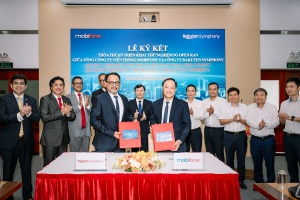
Japan-based Rakuten Symphony inked an MoU with MobiFone Corporation on June 4 to collaborate on a pilot project to deploy 4G and 5G Open RAN networks in Vietnam.

Vietnam's adoption of 5G networks driving innovation Vietnam’s adoption of 5G networks driving innovation

The telecom industry is entering an exciting new chapter with strong 5G adoption and a growing ecosystem that will drive innovation and reshape the way people live, work and connect.

Companies unlock the power of emotional connection
Photo: Shutterstock

An Ipsos study named CX Global Insights 2025, which was conducted in 18 countries with 65,000 responses, revealed that 64 per cent of Vietnamese consumers prioritised brands they trust to deliver high-quality products and services, while 57 per cent were willing to pay a premium for superior experiences. These findings underscored the growing importance of CX in driving customer loyalty, advocacy, and business growth. They would also indicate a strong impact of emotional attachment on business outcomes.

The study showed that customers who were emotionally connected exhibited an impressive net promoter score of 72, far surpassing the score of 54 for functionally satisfied customers. Moreover, emotionally attached customers were more forgiving of occasional missteps, with 74 per cent willing to forgive a brand.

Phung Tran, head of customer experience at Ipsos Vietnam, said, “Building strong emotional connections is key to great customer experiences. It comes from quality interactions and boosts customer value while insulating brands from occasional mistakes.”

The study also revealed that among seven sectors covered in the research, the concept of emotional attachment was widely pursued among banks and online retailers (both at 50 per cent) while being relatively new among the automotive and insurance industries (45 per cent and 44 per cent).

Based on the results, when successfully building emotional attachments with customers, the CX key performance indicators climbed markedly among insurance and supermarket companies.

The Vietnam study also reveals that sectors such as fintech, banking, and online retail are successfully delivering memorable customer experiences. These industries have recognised the importance of emotional connections and have implemented strategies to build strong brand-customer relationships. On the other hand, the mobile network provider and insurers sector fall behind, indicating a need for improvement in empowering customers and giving them a sense of command in their interactions with the brand.

The picture is clear that some industries are behind compared to others. “There is certainly homework to be done by many CX leaders in Vietnam,” commented Tram Luong, CX research manager at Ipsos Vietnam.

To elevate CX through emotional attachment, a holistic approach, combining the “Forces of CX” with an “Experience Factors” framework should be considered. The “Forces of CX” refer to the core elements that shape a customer’s perception during interactions with a brand – typically including emotion, ease, and effectiveness. Meanwhile, the “Experience Factors” framework focuses on elements that influence the customer journey – such as technology, touchpoints, processes, and people.

The holistic approach encompasses employee training, personalisation, omnichannel consistency, and alignment with brand promises, enabling businesses to consistently deliver exceptional experiences across all touchpoints.

Personalisation is also a powerful differentiator and can elevate the relationship. Brands need to demonstrate an understanding of customers’ personal situations and circumstances and use that to deliver a tailored interaction.

“As Vietnamese consumers become increasingly demanding, businesses are prioritising CX to remain competitive. By embracing the power of emotional factors, companies can unlock the full potential of CX and build profitable customer relationships. The journey from like to love lies in understanding, anticipating, and exceeding customer expectations is now going to emotional level. Those who master this art will emerge as leaders in Vietnam’s dynamic and competitive business landscape,” added Tran.

Gradual but radical changes set to sweep pharmaceutical landscape Gradual but radical changes set to sweep pharmaceutical landscape

The upcoming implementation of the EU-Vietnam Free Trade Agreement (EVFTA) is expected to transform the competitive landscape of Vietnam’s pharmaceutical and medical industry.

High excitement and trust in tech advancements thanks to AI High excitement and trust in tech advancements thanks to AI

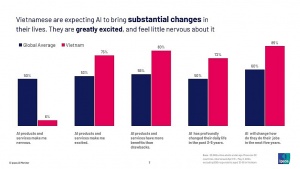
The findings of Ipsos Vietnam position Vietnam as a dynamic market ready to adopt and benefit from AI technologies, echoing the sentiment across other Asian countries.

Businesses are adapt to Vietnam's demographic shifts Businesses are adapt to Vietnam’s demographic shifts

Businesses need to urged to adjust their strategies as the country enters a period of an ageing population in the next 10-15 years, according to a survey released on September 16.

Building on the momentum from its impressive launch of Springville in Nhon Trach, Dong Nai earlier this quarter, Gamuda Land continues to solidify its presence in southern Vietnam’s real estate market with the debut of Elysian – a premium residential project in East Ho Chi Minh City that has drawn strong interest from both homebuyers and investors.

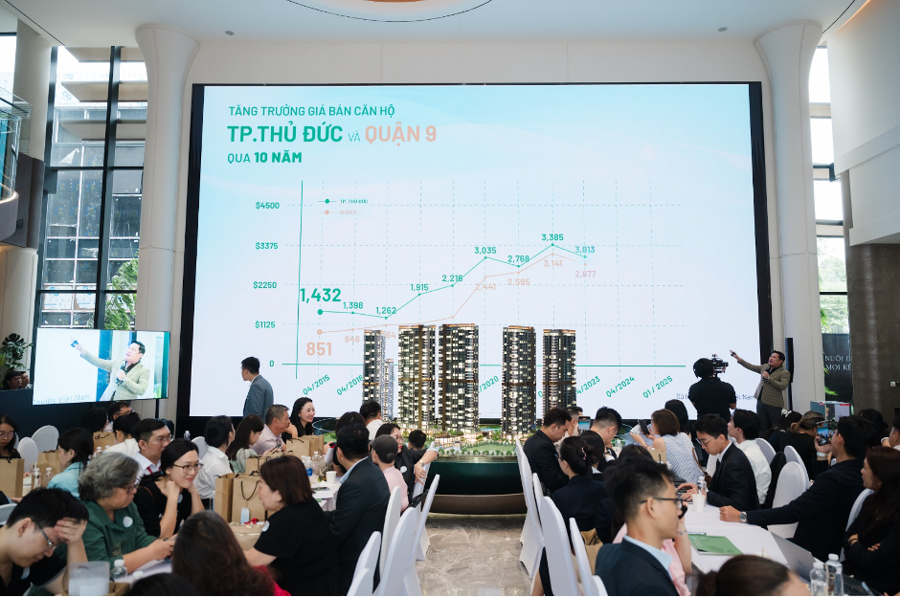
Elysian draws strong interest from both homebuyers and investors at its official launch event on the morning of July 27

Malaysia’s leading property developer, Gamuda Land, has officially launched Elysian, its newest project in East Ho Chi Minh City. The launch reinforces the company’s expansion in southern Vietnam following the successful debut of Springville in Dong Nai’s Nhon Trach earlier this year.

Located in Lo Lu Street, Long Phuoc Ward, Ho Chi Minh City (formerly part of Truong Thanh Ward, Thu Duc City), Elysian introduces a rare combination of transparent legal status, ESG-driven design, and strong investment potential, setting it apart in a competitive market.

The launch event on the morning of July 27 attracted a large and diverse audience, including individual homebuyers, investors, and representatives from top-tier real estate distribution agencies. The project’s compelling offer and strategic positioning have made it a focal point for both buyers and industry observers.

Positioned within the Saigon Hi-Tech Park (SHTP), Elysian benefits from proximity to major employers such as Intel, Samsung, Nidec, and Nipro. As the SHTP continues to attract high-skilled professionals from across Vietnam and abroad, the demand for high-quality, professionally developed housing is on the rise, creating ideal conditions for a project like Elysian to thrive.

The 2.8-hectare development features four 21-storey towers with a total of 1,398 apartments and eight shophouses. Housing options range from flexible studios and one- to three-bedroom units to high-end sky villas, as well as Elysian’s distinctive lanai and potted plant residences.

The Elysian high-end apartments complex features over 40 premium amenities, a 6,800 sq m botanical landscape, and 1,190 sq m of water surfaces  

Designed with an emphasis on sustainability and livability, more than 51 per cent of the total area is devoted to landscaping and amenities. Highlights include a 6,800-square-meter botanical garden, 1,190 square meters of water features, six swimming pools, and an immersive rain waterfall, creating a lush, resort-style living experience in the middle of the city. In total, over 40 amenities have been integrated to support a modern, community-oriented lifestyle.

Importantly, Elysian stands out as one of the few developments in Thu Duc with full legal transparency and a government-approved sales permit. Construction is progressing rapidly, with Tower A currently reaching the 10th floor, Tower C the 13th floor, and Towers B and D at the 3rd floor. The project is scheduled for handover in 2027.

Elysian’s pricing is equally strategic. With an average of VND68 million per square meter, the project offers units starting from VND2.2 billion for a studio or one-bedroom apartment, while two-bedroom options (starting from 68 square meters) are priced from around VND4.1 billion. According to CBRE’s Q2 2025 market report, average apartment prices in East Ho Chi Minh City have reached VND82 million per square meter, making Elysian’s offering notably competitive.

The developer has introduced a set of flexible payment plans to meet a wide range of buyer needs. These include options for early signings with only a 5 per cent deposit, extended payment timelines until 2027, discounts of up to 5 per cent, and free management fees for up to five years. One standout plan allows buyers to finance 80 per cent of the property value through a partner bank, with 7 per cent annual interest supported for up to 24 months from the first disbursement. This financing structure helps lower the barrier to homeownership while giving investors greater flexibility in capital management.

Located in the heart of the former District 9 area, Elysian is expected to see a significant surge in property value in the near future.  

With legal assurance, a high-potential location at the center of the city’s innovation corridor, and significant surrounding infrastructure expected to be completed by 2027, Elysian is well positioned for value appreciation. Industry experts regard it as one of the few projects in East Ho Chi Minh City offering both near-term livability and long-term investment growth.

For Gamuda Land, the launch of Elysian marks another significant step in its southern Vietnam strategy, combining international expertise, ESG focus, and local market insight to deliver high-quality, future-ready urban developments.

Cathay Cargo specialised solutions embrace Vietnam high-tech industries

Cathay Cargo has developed a specialised service known as Cathay Expert, designed to provide comprehensive logistics solutions for high-value, high-risk cargo categories that require stringent safety and precision standards.

Cathay Dangerous Goods, meanwhile, specialises in the professional handling of hazardous materials, including flammable liquids, toxic gases, radioactive substances, and more.

Unlike conventional freight transport, items like aircraft engines, semiconductor machinery, industrial machinery, and vehicles require complex handling processes that demand deep expertise and suitable infrastructure. Each shipment must comply with strict technical specifications, safety monitoring, timely delivery, and international regulatory standards.

Cathay Expert was created as a specialised service platform to help customers, especially those in the aviation, engineering, and manufacturing sectors, overcome the logistical challenges associated with heavyweight, ultra-long, odd-sized vibration-sensitive, fragile items, as well as the most special shipments like helicopters and precision machinery.

“When transporting aircraft engines or semiconductor machinery, mere freight capacity is not enough. Customers need a partner who understands the risks, has rigorous quality control systems, a professionally trained expert team, and end-to-end synchronised processes. That’s why we developed Cathay Expert,” said Duong Ngoc Son, area cargo manager for Vietnam.

Cathay Cargo specialised solutions embrace Vietnam high-tech industries

Cathay Expert strategically integrates the aviation value chain, from operations and engineering to logistics. Photo: Cathay Cargo

Leveraging its base in Hong Kong, Asia’s leading cargo transshipment hub, Cathay Cargo positions Cathay Expert as a regional service connecting Vietnam with key markets such as Singapore, Japan, and Hong Kong.

These markets serve as crucial hubs: Singapore is Southeast Asia’s largest aircraft maintenance and aerospace technology centre, Tokyo Narita is Japan’s transport and technical gateway, a nation renowned for excellence and reliability in heavy industries, while Hong Kong stands as a premier international transshipment point and Cathay Cargo’s global coordination centre.

Vietnam’s commercial airlines, with expanding fleets, face growing demands for regular engine maintenance that complies with ICAO and IATA technical and safety standards. However, local maintenance infrastructure does not yet fully meet the deep technical requirements for next-generation engines.

Therefore, transporting engines to specialised centres around the world has become the preferred choice, ensuring precision, technical quality, and optimal maintenance turnaround times.

Cathay Cargo serves as the logistical bridge, managing the entire process, from receiving cargo at domestic technical warehouses, handling international transportation and customs clearance, to final delivery at maintenance facilities.

With expertise in handling high-tech freight and dedicated teams at key transit points including Ho Chi Minh City, Hanoi, and Hong Kong, Cathay Cargo guarantees the entire transport journey adheres to strict standards. This includes specialised packaging, freight or passenger aircraft transport, 24/7 shipment monitoring, and dedicated technical support at airports. Within Vietnam, Cathay Cargo is actively strengthening strategic partnerships with domestic airlines.

The cooperation between Cathay Cargo and Vietnamese carriers not only optimises costs and timing for maintenance operations but also strategically integrates the aviation value chain, from operations and engineering to logistics. By serving as the carrier that transports aircraft engines to specialised service facilities, Cathay Cargo is enabling Vietnamese airlines to maintain operational efficiency and continue flying safely, ultimately supporting them in serving the market more effectively.

Lithium-ion batteries are the backbone of modern technology, powering everything from electric vehicles and mobile devices to aerospace applications. However, they are also among the most dangerous air cargo due to risks of fire or explosion from collisions, overheating, or electrical leakage.

To minimise such risks, Cathay Cargo has implemented the Regulated Battery Initiativeservice under Cathay Dangerous Goods. Here, lithium-ion batteries in loose form are packed inside internationally certified fire containment bags, designed to isolate and prevent fire spread in case of incidents.

Moreover, these shipments are strictly monitored by the Dangerous Goods Regulations team, experts trained according to IATA standards, ensuring compliance throughout the journey from origin to delivery.

What sets Cathay Expert apart is its transport capability and advanced real-time monitoring technology and experienced logistics professionals. The cargo tracking system uses GPS sensors and measures temperature and humidity, allowing customers to closely monitor shipment conditions, especially vital for sensitive items like engines and batteries.

HeavyPro is the latest iteration of an app developed by the Cargo Operation Centre and Cathay’s IT teams. This app both automates the calculation process but also generates precise loading diagrams of how and where the shipment should be secured to the hold with restraint straps.

Major transit hubs such as Hong Kong, Singapore, and Tokyo Narita are equipped with dedicated infrastructure for specialised cargo, including specialised warehouses and heavy-lift unloading facilities. Their technical and logistics teams operate 24/7, ready to manage emergencies and coordinate flexible schedules.

As Vietnam increasingly integrates into global value chains, the demand for transporting high-tech cargo such as aircraft engines, electronic components, and hazardous goods will continue to grow. With Cathay Expert and Cathay Dangerous Goods, Cathay Cargo is not merely providing logistics services but is shaping new standards for specialised cargo transport across the Asia-Pacific region.

Cathay Cargo asserts global positioning with Vietnam presence Cathay Cargo asserts global positioning with Vietnam presence

Cathay Cargo, the cargo division of the Cathay Group, is steadily asserting its global position through a robust fleet, an expansive route network, and a sharp market strategy with its Vietnam presence.

Cathay Fresh: the optimal cold-chain solution Cathay Fresh: the optimal cold-chain solution

Cathay Fresh, Cathay Cargo’s specialised cold-chain transportation solution, was designed to preserve the maximum freshness of perishable goods such as fruits, vegetables, seafood, pharmaceuticals, and meat.

The project will be constructed on a 15-ha site within the Eastern Industrial Park of the Dung Quat Economic Zone in Van Tuong commune, Quang Ngai province.

The Dung Quat Economic Zone and Quang Ngai Industrial Parks Authority (DEZA) in central Quang Ngai province has granted in-principle approval for a major rail track and special steel project worth VND10 trillion ($380 million).

The project will be developed by Hoa Phat Dung Quat Rail and Special Steel JSC, a subsidiary of steel conglomerate Hoa Phat Group.

According to DEZA, the project will span 14.79 hectares and is designed to produce up to 700,000 tons of rail and special steel annually.

The facility is expected to operate for 50 years from the date of land allocation or lease.

Of the total investment, VND3.8 trillion will be sourced from the investor’s equity, with the remaining capital to be mobilized through other channels.

Legal procedures and site clearance are expected to be completed by the second quarter of 2026. Construction is scheduled to last two years, with completion projected for the third quarter of 2028.

According to the proposed timeline, all legal procedures, compensation, and site clearance are scheduled for completion by the second quarter of 2026. Construction is expected to be finished, with the plant becoming operational in the third quarter of 2028.

The Management Board stated that once operational, the facility will be crucial in meeting the domestic demand for railway rails for upcoming key national projects, including the North-South High-Speed Railway, and the Lao Cai – Hanoi – Hai Phong railway,  among others.

According to FPT Digital, AI and generative AI are creating positive impacts across the global pharmaceutical industry. GenAI is expected to contribute between $60 billion and $110 billion annually from 2024 to 2029. All stages of the pharmaceutical value chain are benefiting from the application of GenAI.

Hoang Viet Anh, chairman of FPT Digital, explained that AI supports the development of new drugs by significantly reducing both time and costs. A notable example is Insilico Medicine, which, with AI support, discovered a new drug in under 18 months, at just 10 per cent of the usual cost.

“In clinical trials, AI can shorten the trial period by up to 12 months and cut costs by 50 per cent compared to conventional methods,” Anh said.

To realise these substantial benefits, the global pharmaceutical industry is expected to invest heavily in AI towards 2030, with projected annual growth of 42.68 per cent. By 2029, total investment in AI by pharmaceutical companies is forecast to reach $18 billion, with the Asia–Pacific region emerging as the fastest-growing market.

“The application of AI in the pharmaceutical industry has been, and will continue to be, a strong development trend,” said Anh. “Vietnam cannot remain outside that trend. This is a golden opportunity for Vietnam’s pharmaceutical sector to embrace digital transformation and apply AI to boost operational efficiency.”

Anh noted that Vietnam currently has a highly open legal framework, including heavily promoted new rules on providing strong impetus for digital transformation and the application of new technology and innovation across all sectors, including pharmaceuticals.

In parallel, the role of the private economy is being enhanced, enabling pharmaceutical firms, hospitals, doctors, and pharmacists to collaborate based on shared data systems.

However, experts have pointed out that Vietnam’s healthcare sector still faces considerable challenges in applying AI and innovation to improve healthcare accessibility. The pharmaceutical data infrastructure remains fragmented, lacking a centralised, standardised, and digitalised system – a major roadblock to development.

“The industry continues to face difficulties in tracing drug origins and preventing the circulation of counterfeit or substandard medicines,” admitted Anh from FPT Digital. “Clinical trials for new drugs also remain lengthy.”

Experts suggested that Vietnam could learn from international models to enhance innovation and digital transformation in the sector. Hwee Ching Ang, deputy CEO of the Experimental Drug Development Centre in Singapore, said rising healthcare demand in the Asia–Pacific region is driving greater interest and investment in innovation. With rapid growth and escalating demand, the region is becoming a new frontier for the life sciences sector.

“In response, the Singaporean government has long prioritised biomedical innovation to boost research output and attract talent,” he said. “Singapore has steadily invested in research and development for more than two decades, enhancing the financial environment through both domestic and international capital inflows into the biotech ecosystem.”

He added that Singapore is strengthening translational and clinical research capabilities and attracting multinational companies to establish regional headquarters and research centres.

As a result, more than 41 per cent of the world’s leading biopharmaceutical companies now have their regional headquarters in Singapore, making it the most innovative nation in Asia–Pacific. The country’s ecosystem comprises a diverse mix of multinational corporations, startups, government agencies, venture capital investors, and incubators.

Dr. Chang Liu, CEO and founder of ASK Health Asia, said that building a multi-layered health financing system can help improve access.

“There is a growing trend in Asia–Pacific towards multi-source healthcare financing to ensure better access to high-value treatments,” Liu said. “Evidence shows that traditional public funding mechanisms may be limited in scope and availability, creating delays or gaps in patient access.”

For example, Singapore has evolved from a savings-based model to a multi-source system, developing government-backed commercial health insurance schemes that now cover more than 70 per cent of the population.

Mainland China is working to build a multi-layered insurance framework with basic medical insurance at its core, supplemented by commercial insurance. It has also promoted public–private partnership models, now covering more than 12 per cent of the population.

In Taiwan, authorised agencies are exploring diversified financing mechanisms for high-value treatments not covered by national health insurance, including a dedicated cancer drug fund to ease patients’ financial burdens.

Japan, meanwhile, is advancing initiatives to strengthen its drug discovery capabilities through the Council of the Concept for Early Prevalence of Novel Drugs to Patients. These efforts aim to eliminate both drug lag and drug loss.

Specifically, Japan is establishing frameworks for first-in-human clinical trials, enhancing the role of core clinical research hospitals in drug development, promoting multi-regional clinical trials, supporting the development and career progression of clinical trial professionals, and encouraging overseas companies to conduct trials in Japan.

Takaaki Enoki, deputy director of the National Healthcare Policy Secretariat under the Japanese government, said, “To maintain Japan’s global leadership in drug discovery, we are building an ecosystem that supports academia and startups from early research to clinical application, with consistent policy and financial backing. This is also vital for ensuring national security.”

By reforming the structure of the pharmaceutical industry and improving the investment environment, Japan aims to create a sustainable system that enables continual, cyclical development of innovation and capital.

“At the same time, we will promote balanced policies over the medium and long term, considering the integration of general treatment and self-care models,” Enoki added.

Vietnam currently has nearly 95 per cent of its population covered by health insurance. However, despite achievements in healthcare financing, the country still faces a high level of out-of-pocket spending, which now exceeds 40 per cent of total healthcare expenditure – indicating that many individuals are still paying significantly for medical services beyond insurance coverage.

Pharma sector faces up to AI hurdles

Le Thanh Long, deputy Prime Minister

Vietnam’s healthcare system is currently deeply affected by digital transformation and innovation. Science and technology are changing approaches to medical examination and treatment, disease prevention, scientific research, training, medical management, and people’s health management.

In recent times, digital transformation in healthcare has made significant progress. All medical facilities have deployed hospital information systems. Many have deployed e-health records, remote exam and treatment, electronic prescriptions, AI treatment support, and the use of robots.

However, digital transformation in healthcare still faces many issues which raise urgent requirements for innovation in leadership, direction, and strong implementation in public healthcare in the new era as directed by the general secretary.

With that spirit, the Politburo has recently issued important pillars in the form of various resolutions for national development. These resolutions, together with the Politburo’s resolutions in the health sector that are about to be issued, will create strong momentum and breakthroughs in healthcare.

David Duong, global primary healthcare director Harvard Medical School

Vietnam has made strides in policy. The country expands health insurance coverage to 93 per cent of the population, including a wide range of primary healthcare services, expanding primary healthcare services through a pilot family medicine model, and upgrading commune health stations to manage non-communicable diseases and provide patient-centred care. It also carried out training and retraining of health workers and investment in digital health, as well as issuing clinical guidelines for chronic diseases that emphasise hierarchy.

The country needs continued investment in policy implementation. Policy implementation needs support because of outdated healthcare staffing model. Many doctors at commune health stations are unqualified or inexperienced in chronic disease care. In particular, task sharing, competency-based training, and incentives are needed to retain healthcare workers in rural areas.

Supervision, support, and experience are insufficient to improve quality and implement clinical standards.

Local policies have not kept up with the times. National policies call for decentralisation, but this must be accompanied by changes and updates to local-level processes and procedures (for example diagnostic systems and sample transport systems). It should also overcome the loss of trust in the primary healthcare system. Patients often bypass primary healthcare to go directly to higher-level hospitals due to lack of trust in the services of commune health stations.

Upward trend continued in apartment selling prices, particularly in Hanoi and HCM City.

Vietnam recorded an estimated 157,021 housing transactions in the second quarter of this year, representing a 16.6% increase compared to the same period in 2024, according to the latest report from the Ministry of Construction.

The growth was driven largely by a surge in land plot transactions, which rose by 21.3% year-on-year. Transactions involving apartments and individual houses also saw a more modest rise of 2.61%.

The report noted a continued upward trend in apartment selling prices, particularly in major urban centers such as Hanoi and Ho Chi Minh City.

In Hanoi, apartment prices hit a decade-high in the second quarter, reaching VND80 million ($3,041) per square meter, a 5.6% increase over the previous quarter and a sharp 33% rise year-on-year.

In Ho Chi Minh City, average apartment prices climbed to VND89 million ($3,384) per square meter.


HONG KONG SAR – Media OutReach Newswire – 24 July 2025 – Recently, DL Holdings Group (1709.HK) has entered into strategic cooperation agreements with ViaBTC, Asseto, and Rich Dragon Consultants, while actively advancing the tokenization of HK$500 million in assets for the DL Tower. These initiatives have sparked significant market attention, with the stock price surging over 70% in a single day. On July 23, DL Holdings issued a voluntary announcement on the Hong Kong Stock Exchange, detailing its latest strategic plans and development roadmap for the digital finance sector.
Three-Phase Strategic Plan to Build a Comprehensive Digital Finance Ecosystem
DL Holdings’ digital finance development strategy will be implemented in three phases:
In the first phase, DL will establish a licensed virtual asset over-the-counter (VA OTC) and prime brokerage business. This will focus on providing compliant virtual asset trading services for institutions and ultra-high-net-worth clients, creating stable trading and clearing channels, and establishing it as the core revenue engine for the group’s digital finance operations.
In the second phase, the group plans to build an RWA tokenization and asset management platform. Leveraging its existing client resources and technological infrastructure — particularly its ultra-high-net-worth community and professional investor network — DL will tokenize real-world assets (RWA) to enhance liquidity and optimize asset management efficiency.
In the third phase, DL will construct a compliant cross-border digital asset fund ecosystem. The “International – Hong Kong” hybrid model will combine the advantages of open-market regulations with the needs of global investors. Leveraging top-tier quantitative trading teams and fund-of-funds (FoF) networks, the group aims to scale its assets under management (AUM) and lead the development of a globalized digital capital market.
Core Strengths Lay the Foundation for Growth
DL’s ambitious plans are backed by years of solid groundwork. As a compliant financial institution holding full licenses from the Hong Kong Securities and Futures Commission (Types 1, 4, 6, and 9), Singapore’s MAS, and the Cayman Islands, DL has a first-mover advantage in cross-border regulatory adaptation. Its inclusion in the “Stock Connect” program has not only attracted more capital but also increased investor awareness of DL. Currently, the group has established a three-tier user matrix: a core circle of over 60 ultra-high-net-worth family offices, more than 1,000 professional investors active on DL Securities’ platform, and NeuralFin’s social platform targeting millions of mass users. This “pyramid” structure supports a full spectrum of services, from high-end asset trading to inclusive finance.
Notably, DL boasts strong technological and resource reserves. NeuralFin, a subsidiary of DL, has secured a strategic investment from Qraft, a top Asian FinTech company backed by SoftBank. In the Web3.0 space, DL has partnered with ViaBTC, Asseto, and other leading institutions for RWA technology platforms. With operational networks spanning Hong Kong SAR, Silicon Valley, Singapore, and other key markets, DL is shaping a cross-border ecosystem bridging traditional asset management and digital finance.
Looking Ahead: Accelerating the Implementation of Digital Finance Strategies
The market’s most pressing question—the timeline for execution—has also been addressed. DL revealed in its announcement that it will focus on three key tasks in the second half of the year:
1. Extending its existing Hong Kong SFC licenses to cover virtual assets, with approval expected by October 2025.
2. Applying for a virtual asset OTC license while preparing stablecoin use cases and pursuing stablecoin qualifications.
3. Closely monitoring the Hong Kong SFC’s policies on security token offerings (STOs) and RWA issuance to adjust business strategies accordingly.
“RWA and stablecoins are not just technological innovations but a transformative shift toward financial inclusivity” said Andy Chen, Chairman of DL Holdings and NeuralFin. “DL doesn’t ride trends; it pioneers them. We don’t fear change; we lead it. Because true wealth belongs to those who can see the future.”
From the tokenization of HK$500 million in DL Tower assets to the clear outline of its “three-Phase” strategy, DL is steadily navigating the Web3.0 wave with compliance as its anchor and technology as its oar. This confidence stems from its belief in Hong Kong’s vision to become a global Web3.0 hub. By adhering to principles of compliance, security, and foresight, DL is driving the next generation of financial infrastructure, pioneering digital capital markets and RWA tokenization to build a unique digital financial ecosystem. Moving forward, DL will continue to balance innovation with compliance, accelerating growth through organic expansion and strategic acquisitions to create long-term value for shareholders and partners in the Web3.0 era.

The issuer is solely responsible for the content of this announcement.

Private investment has become one of key growth drivers.

Vietnam’s corporate bond market is emerging as a crucial financing channel to support the country’s ambitious infrastructure development plans, which are estimated to require $245 billion between 2025 and 2030, according to a recent report by credit rating agency VIS Rating.

The report highlighted that while Vietnam’s public sector can fund approximately 70% of these infrastructure needs—including expressways, high-speed rail, and power projects—private capital will be essential to bridge the remaining gap.

As bank lending tightens—due to regulatory limits on using short-term deposits for long-term loans—the role of the bond market becomes even more critical. Bank credit to toll road projects, for instance, has declined by 6% annually since 2020.

In order to attract private investment, the Government has conducted many regulatory reforms,  paving the way for project companies to issue bonds more flexibly – such as through privately-placed bond issuances without historical financials under the amended PPP Law.

The state is also stepping in with higher equity contributions to ease debt burdens and improve credit quality.

A forthcoming decree is expected to further unlock the market by allowing public offerings and immediate listings of infrastructure bonds. While issuance conditions will be eased, post-issuance controls, such as trustee oversight, escrow accounts, and regulated disbursements, will tighten, creating a more robust legal framework.

Meanwhile, new requirements on disclosure, issuance standards, and mandatory credit ratings are boosting transparency and investor confidence.

According to VIS Rating, these combined reforms position corporate bonds as a viable and sustainable long-term funding tool to help Vietnam achieve its infrastructure ambitions.