The proposed investment is appropriate and adheres to the developmental roadmap laid out in the master plans for the period to 2030 and beyond.

The Ministry of Construction (MoC) has issued an Official Dispatch to the Ministry of Finance, requesting its opinion on the investment policy approval dossier for the Cai Mep Ha General and Container Port construction project.

Accordingly, the MoC affirmed that the project proposal—submitted by a consortium of investors including Geleximco Group, International Transport and Trading Joint Stock Company (ITC), and the State Capital Investment Corporation (SCIC)—is in line with both national and sectoral development strategies.

Specifically, the proposal aligns with the National Overall Master Plan for the 2021-2030 period, with a vision toward 2050, the master plan  for the Development of Vietnam’s Seaport System, and the detailed planning for the regional seaport cluster for the 2021–2030 period, with a vision toward 2050. This alignment encompasses the project’s investment objectives, the proposed vessel capacity, and the number and functionality of its berths.

The MoC also noted that the proposed phasing of investment is appropriate and adheres to the developmental roadmap laid out in the master plan for the period to 2030 and beyond.

According to the ministry, the project will not only help realize the goal of transforming the Ba Ria–Vung Tau seaport into an international gateway but also address persistent challenges stemming from previously fragmented and small-scale investments.

Currently, the Ba Ria–Vung Tau seaport area has seven container berths with a designed annual capacity of approximately 7.66 million TEUs (as of 2020). However, over the past three years, actual throughput has consistently exceeded this figure, averaging more than 8 million TEUs annually. In 2024 alone, throughput reached 10.98 million TEUs, with the majority handled by five berths within the Cai Mep terminal area.

Under the Master Plan for National Seaport System Development for the 2021–2030 period, with a vision to 2050, the Cai Mep–Thi Vai terminal area has been identified as a priority investment zone. The implementation roadmap for this master plan further emphasizes the need for the swift selection of an investor to advance development in the Cai Mep Ha area, consistent with approved planning.

How would you assess Vietnam’s trade performance so far, and what are your expectations for the second half of 2025?

All business support tools explored for upped trade
Tran Thanh Hai, deputy director-general of the Ministry of Industry and Trade’s Agency of Foreign Trade

The first half of 2025 has provided a relatively solid footing. Our total import-export turnover achieved double-digit growth, and the trade surplus reached around $5 billion. This reflects resilience and competitiveness in global markets despite an unpredictable global landscape.

However, there are growing uncertainties in the second half of the year. Most notably, tensions in the Middle East have escalated. This situation could cause major disruptions to global shipping routes, resulting in congestion, delays, and significantly higher freight rates. These developments will pose challenges to Vietnamese exporters in terms of both costs and market access.

One of the critical issues is the status of Vietnam–US trade negotiations, particularly regarding tariffs. Currently, we do not yet have a conclusive outcome on whether duties will be lowered, and by how much. This uncertainty places additional pressure on businesses, making it difficult for them to forecast, make pricing decisions, or adjust production plans in advance.

It also means that Vietnamese firms might have to consider contingency strategies, such as diversifying their export destinations or adjusting product lines, in order to mitigate the risks associated with over-reliance on a single market.

What steps is the Ministry of Industry and Trade (MoIT) taking to support exporters and maintain trade growth in the second half of the year?

The MoIT is pursuing a four-fold strategy to support the export sector. Firstly, we remain committed to deepening international economic integration by negotiating and expanding free trade deals. They are essential in creating new opportunities for our goods and services, reducing barriers, and offering preferential access to strategic markets.

Secondly, we are stepping up trade promotion efforts. This includes organising trade delegations, participating in international exhibitions, and connecting domestic producers with overseas distributors. These activities help enterprises take full advantage of trade deals and increase visibility in competitive markets.

Thirdly, we are focusing on guiding enterprises to maximise the use of rules of origin in their export processes. While many businesses are familiar with these regulations, a large number still lack the capacity or tools to effectively utilise them. Improved use of origin certification can enhance competitiveness, reduce tariff costs, and strengthen compliance in export markets.

Lastly, we are working on restructuring and enhancing the resilience of supply chains. This involves reviewing our import sources to ensure stable input for production and pushing for greater localisation. Over time, these efforts will lead to more transparent and sustainable supply chains that are better equipped to deal with global shocks.

In recent months, shipping costs have increased again. What are the main causes, and how is the government addressing the issue?

There are two main drivers of rising freight costs. Firstly, China has been accelerating its exports following temporary tariff adjustments with the United States, which has increased demand for shipping capacity across Asia. Secondly, the aforementioned geopolitical tensions are disrupting key routes, particularly around the Red Sea and Suez Canal, thereby driving up insurance and transportation costs.

In response, the MoIT has been coordinating with other ministries, to help businesses adopt more efficient and flexible logistics strategies. We have encouraged enterprises to explore alternative modes of transport, such as railway freight, which can be more cost-effective and less vulnerable to maritime bottlenecks.

In the long term, Vietnamese businesses must develop strategies based on risk management and operational efficiency. The lessons from the pandemic and recent global instability have demonstrated the importance of agility and forward planning in supply chain operations.

The global shipping industry is preparing for a carbon tax expected to be implemented by October. What does this mean for Vietnam’s maritime sector, and how are we responding?

The upcoming global carbon tax will pose significant challenges to Vietnam’s maritime industry. The International Maritime Organization is tightening emissions requirements, and shipping companies worldwide will be expected to reduce their carbon footprint.

Vietnamese shipping firms are facing pressure to transition to low-carbon or alternative fuels. Our maritime sector remains heavily reliant on traditional fossil fuels, which puts us at a disadvantage in terms of compliance and competitiveness.

The Vietnam Maritime Administration has already submitted a proposal outlining a roadmap for green transition in the shipping sector. This includes supporting the shift to cleaner fuel technologies and encouraging the upgrade and renewal of the national fleet to enable compatibility with such fuels.

However, this transition will require substantial investment. The government acknowledges this and is exploring financial support mechanisms to assist businesses. Such support is vital to encourage enterprises to modernise their fleets and adopt advanced propulsion systems.

With proper coordination between the state and private sector, we believe Vietnam’s maritime industry can gradually align with global environmental standards while enhancing its long-term sustainability and competitiveness.

The proposal calls for the expansion of 18 component projects along the expressway, a vital artery for the nation’s economy.

The Ministry of Construction has submitted a report to Prime Minister Pham Minh Chinh and Deputy Prime Minister Tran Hong Ha, proposing for expanding key sections of the Eastern North-South Expressway under Public-Private Partnership (PPP) model. 

The proposal calls for the expansion of 18 component projects along the expressway, a vital artery for the nation’s economy.

This work is part of a national goal to complete 3,000 km of expressways by 2025 and is considered essential to support ambitious economic targets, including 8% GDP growth or highter in 2025 and annual double-digit growth in the 2026-2030 period.

While the ministry had initially recommended using public funds to allow for immediate implementation and avoid project delays, Government leaders have now directed the ministry to study the feasibility of leveraging private investment through the PPP method.

Upon completion of all component projects, toll collection will be implemented on all sections, including those built with public funds, in accordance with National Assembly resolutions.

To ensure seamless and efficient operation across the entire route, the Ministry plans to select investors using a combined approach. The strategy will prioritize a blend of Operate & Manage (O&M) and Build-Operate-Transfer (BOT) models.

Under an O&M contract, the state funds the investment and hires a private firm to operate and maintain the project. In contrast, the BOT model allows a private investor to directly fund construction and operate the road for a specific period to recoup their investment capital before transferring it back to the State.

Electronics remains a pillar of Vietnam’s export economy, representing approximately 57% of total export turnover, according to the latest report on “Electronics FDI Sector Ahead of Reciprocal Tariffs’ Effects” released by FiinRatings.

Electronics sector encompasses key product categories such as computers; electronic products and components; mobile phones and parts; cameras, camcorders, and accessories; machinery and spare parts; as well as electrical wires and cables.

The top 48 FDIs in the field of electronics are responsible for around 70% of the country’s electronics export turnover, in which Samsung-related entities contributing 30%, followed by Apple’s supplier network with 9%.

The report also suggests opportunity to reshape Vietnam’s electronics supply chain, which currently reveals a substantial reliance on imports, with less than 1% of input value sourced from domestic suppliers, while 15% from FDI satellite firms, and the remainder fully imported. 


Right policy vision crucial for growth

Data from the Ministry of Industry and Trade (MoIT) show that Vietnam’s total import-export turnover in the first six months of the year reached an estimated $426-430 billion, up 15.5-15.8 per cent on-year. Exports accounted for $215-217 billion of that total, marking an increase of 13.8-14 per cent, while the country maintained a trade surplus of $3.4-4 billion.

These figures represent a solid over-performance compared to the government’s export scenario for the year, reaffirming Vietnam’s recovery trajectory.

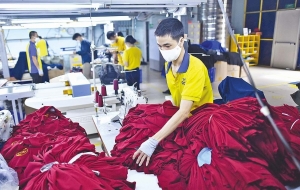
One of the key growth engines was the textile and garment industry, which has shown a compelling turnaround after a prolonged slowdown. Export turnover in this sector reached $17.8 billion in the first five months, up 10 per cent on-year, signalling a global rebound in demand.

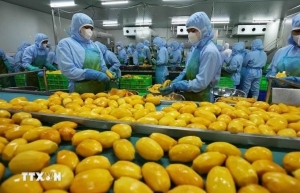
Figures from the Ministry of Agriculture and Environment show that agricultural exports reached $18.3 billion in the first half of 2025, up 16.8 per cent from the same period last year. This surge was driven largely by coffee, which brought in $5.5 billion, doubling the $2.7 billion figure recorded in the same period last year and already exceeding 2024’s full-year result of $5.4 billion. This marks the first time the coffee sector has achieved such a milestone in just six months.

A prime example of the recovery is TNG Investment and Trading JSC, which has reported its strongest performance since 2021. The company’s revenue in the first half of 2025 reached approximately $163 million, a 15 per cent increase on-year, achieving half of its annual plan. June revenue alone stood at $38.8 million, double the monthly average recorded earlier in the year.

According to FPT Securities, one of the core drivers behind TNG’s strong showing is its strategic shift from the traditional cut-make-trim model to first-tier free-on-board (FOB) production. This approach allows TNG to manage its entire supply chain from raw material sourcing to manufacturing and delivery, boosting both quality control and profitability.

The company reported that 85 per cent of its revenue now comes from FOB orders, with gross margins in this segment reaching 14-18 per cent, compared to the 10-12 per cent typically seen.

However, this transformation does not come without trade-offs. Under the FOB model, companies must bear upfront working capital costs, including sourcing raw materials and handling logistics. To address this, TNG’s board recently approved borrowing up to VND1.2 trillion ($45.78 million) from BIDV’s Thai Nguyen branch to support liquidity, issue letters of credit, and facilitate trade financing.

“The industry’s recovery is no longer isolated to a few firms,” said Mai Thu Hien, deputy general director of the Planning, Finance and Enterprise Reform Department under the MoIT. “We are seeing a broader pattern of adaptation and transformation across the sector. However, we are mindful that the challenges in the global trade environment remain significant.”

Indeed, while the first-half performance is encouraging, the road ahead is less predictable. To meet the full-year export target of $451 billion, representing a 12 per cent growth rate, Vietnam needs to sustain an average of $38.67 billion in export revenue per month. The MoIT acknowledges that such performance levels are demanding under current conditions.

“Maintaining export momentum at this scale is ambitious, particularly as global trade slows and protectionist policies are intensifying in several key markets,” Hien added. “But with early scenario planning, targeted market information, and stronger public-private coordination, we are still optimistic about achieving this year’s target.”

A new wave of trade defence measures also poses a threat to exporters. In the first five months of 2025 alone, there were 10 new trade remedy investigations launched against Vietnamese goods, with four more under preliminary review. These are in addition to over 100 existing trade defence actions already requiring periodic review. Legal costs for responding to such cases can go huge, creating a heavy burden for even the most established exporters.

On the global stage, the World Bank’s Global Economic Prospects report, published in June, warned of a slowdown in world trade due to tariff hikes and broader economic uncertainty. It projects global trade growth of just 1.8 per cent for 2025, a steep drop from the 3.4 per centt seen in 2024, and well below historical averages. This forecast only includes tariff measures in place up to the end of May, without factoring in expected retaliatory tariffs taking effect from July 9.

The MoIT is stepping up market surveillance and policy responses. In addition to supporting enterprises with updated information on market trends and compliance, the ministry is strengthening its guidance on rules of origin and anti-fraud measures. Trade promotion activities are also being enhanced to diversify export markets and adapt to evolving buyer behaviour.

Deputy Minister of Industry and Trade Phan Thi Thang reiterated that free trade agreements will continue to serve as a key driver. “Vietnam’s network of such deals, especially those with major partners, offers significant leverage for export growth and investment,” she said. “Together with rising foreign investment and improved production capabilities, this foundation gives us reason to be confident in the long-term resilience of our export sector.”

Export businesses upbeat about 2025 Export businesses upbeat about 2025

Many firms have secured export orders for 2025, adding vibrancy to production as the year comes to a close. However, challenges ahead remain a concern.

Vietnam eyes 8 billion USD in fruit, vegetable export value in 2025 Vietnam eyes 8 billion USD in fruit, vegetable export value in 2025

Vietnam’s fruit and vegetable sector aims to achieve 8 billion USD in export revenue in 2025, building on significant market expansion and sound growth, according to the Vietnam Fruits and Vegetables Association (VINAFRUIT).

Vietnam’s export turnover up $22 billion in first five months of 2025 Vietnam’s export turnover up $22 billion in first five months of 2025

Despite facing a series of challenges including trade barriers and tariffs from major markets, Vietnam’s exports made a strong recovery in the first five months of 2025, bringing in an additional $22 billion compared to the same period last year.

Masan leads digital transformation to attract foreign capital

At the Techcombank Investment Summit on July 9, Danny Le, CEO of Masan Group, said, “Vietnam possesses key fundamentals to become an attractive destination for global tech giants, including an abundant workforce, a strong innovative spirit, and sustainable economic growth. This is a favourable time for Vietnam to attract new investment capital flows, especially investments in digital transformation.”

However, he also stressed that digital transformation on a large scale requires a suitable financial environment, including a reasonable cost of capital, stable interest rates, and new technologies at accessible prices. For companies like Masan, a key factor to realise digital transformation is a strong financial foundation and access to high-quality capital.

Since its initial public offering in 2009, Masan has raised nearly $5 billion from global financial institutions such as KKR, TPG, Bain Capital, and Alibaba.

The difference is that Masan does not use this capital to pursue short-term growth but focuses on targeted allocation, investing in core technologies, automating the supply chain, expanding the distribution system, and restructuring post-merger and acquisition.

As a result, Masan has formed an integrated ecosystem that operates efficiently and scalably without increasing costs. This lays a solid financial foundation for Masan’s next phase of development. With a clear technological vision and best practices, Masan is expected to herald a wave of global tech capital in the coming decade.

End-to-end supply chain as a competitive edge

Answering a question about Masan’s development in the retail sector, Danny Le stated, “The future of retail lies not only in expanding points of sale but also in building and operating a tech-integrated, end-to-end supply chain. To optimise operational efficiency, companies must invest in both physical infrastructure and digital infrastructure, such as AI, machine learning, and customer data platforms.”

“Building an end-to-end supply chain presents a huge opportunity, but it also requires comprehensive investment in technology, from AI to data, to bring the entire service onto the digital platform,” he added.

Masan is currently among the very few Vietnamese companies that have achieved a complete end-to-end consumer-retail supply chain. The group is taking steps to realise its strategy of becoming one of the region’s leading consumer-retail platforms. From planning to production, logistics, and multichannel distribution, every step of the product journey is tightly controlled by Masan. This is a core factor creating the sustainable growth and superior profit margins for Masan.

Masan leads digital transformation to attract foreign capital
Masan’s integrated end-to-end consumer-retail supply chain

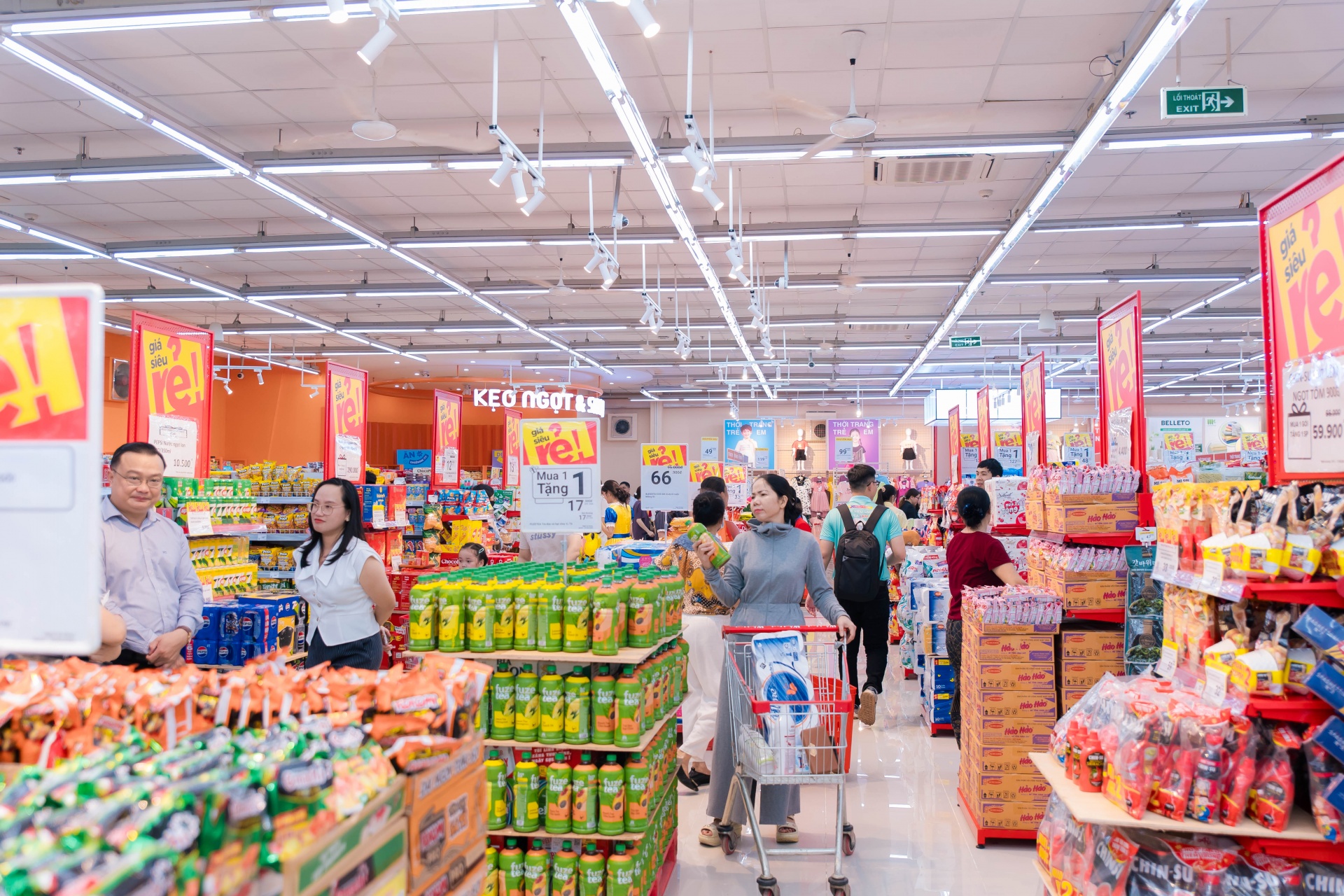
Masan proactively engages in production through subsidiaries such as Masan Consumer, Masan MEATLife, and WinEco, while integrating financial products and services with Techcombank. Operations and logistics are handled by in-house logistics firm SUPRA, which helps optimise inventory, automate restocking, and accelerate market reach. This is coupled with Masan’s modern retail network of over 4,000 WinMart/WinMart+/WiN stores, supermarkets, general trade outlets, and e-commerce channels.

At the touchpoint with the end consumer lies the WiN membership programme, which enables Masan to directly reach 30-50 million Vietnamese consumers. Unlike many companies that act as retailers or manufacturers, Masan serves as a gateway between both ends of the supply chain, creating a unique selling point to optimise profit margins, manage consumer data, and achieve sustainable growth. This is a major competitive edge of the group in a highly competitive market.

A highlight of Danny Le’s presentation was the strategic partnership between Masan and Techcombank. The two sides are jointly rolling out an agent banking model, allowing consumers to access basic financial services at Masan’s retail outlets. This increases the accessibility of modern, flexible financial solutions for millions of consumers.

Following a period of restructuring and building a comprehensive end-to-end supply chain, Masan has achieved impressive results. For the first time, WinCommerce recorded positive profit in 2024 after restructuring. Masan Consumer maintained high profit margins, while Masan MEATLife posted three consecutive profitable quarters, doubling sales through the WinMart system. Overall, Masan’s after-tax profit for 2024 reached nearly VND2 trillion ($76.6 million), a fourfold increase on-year.

In the second quarter of 2025, Masan expects to record positive results. Its net profit after tax post-minority interest is estimated to reach VND1.5 trillion ($57.4 million), soaring nearly 60 per cent from a year ago.

With its proven execution capability, a strong financial base, and a well-functioning end-to-end supply chain, Masan is poised to lead Vietnam’s digital transformation wave, attract foreign capital, and emerge as a market leader in this new era.

Masan posts nearly $15 million Q1 post-tax profit Masan posts nearly $15 million Q1 post-tax profit

Masan Group recorded net profit after tax post-minority interest (NPAT Post – MI) of VND394 billion ($15 million) in the first quarter, marking a 278.8 per cent on-year increase.

Masan poised to lead Vietnam's evolving consumer market Masan poised to lead Vietnam’s evolving consumer market

Rising disposable incomes and evolving consumption patterns in Vietnam present multi-billion dollar growth potential for businesses operating closed-loop retail ecosystems.

WinMart unveils “Russia Corner” – a unique destination for culture and shopping WinMart unveils “Russia Corner” – a unique destination for culture and shopping

WinCommerce, a member of Masan Group, in collaboration with Magnit Group and leading distributors, launched Russia Corner at WinMart Royal City in Hanoi on June 12.

By Thanh Van

July 14, 2025 | 16:30 GMT+7

Singaporean firm licensed build ceramic valley in Thanh Hoa

Thiên Anh –

The project has total investment capital of $193 million with a capacity of 120 million ceramic products annually.

Photo for illustration.

Authorities of the central province of Thanh Hoa have granted investment certificate for Lares Pte. Ltd of Singapore to build an ASEAN Vietnam Ceramic Valley project at Van Thang Yen Tho Industrial Cluster.

The project will cover over 322,345 sq.m in Nong Cong and Yen Tho communes.

The project has estimated investment capital of more than VND5.1 trillion ($193 million) and a capacity of producing 120 million ceramic products per year, including household and industrial ceramics.  

The project implementation will be divided into three phases. The first is scheduled for completion in the second quarter of 2027 with an estimated investment capital of over $84.6 million, while the second is expected to be completed in the third quarter of 2028 with an estimated investment capital of more than $100.1 million. The third is planned for completion in the second quarter of 2030 with investment capital of around $4.3 million.

The investor will contribute over VND1.02 trillion ($38.7 million), while the rest will be mobilized from different legal sources.


At last week’s Green Industry Forum in Hanoi, Nguyen Ba Hung, chief economist at the Asian Development Bank (ADB) in Vietnam, said that many countries have already succeeded in pursuing economic growth while cutting emissions.

“This affirms the feasibility of achieving both high growth and emissions reduction,” he said. “We are living in an era of growth. Green development is opening up significant opportunities. However, we must also acknowledge the accompanying risks and challenges.”

Hung questioned whether Vietnam is truly committed to joining this global trend. “By issuing its national strategy on green growth, the government has clearly expressed its intentions. However, to realise them, Vietnam must invest in green technologies, transform its business models, and revise its national growth approach – from enterprise level to macroeconomic scale,” he said.

While some businesses acknowledged the pressure and difficulties of adopting sustainable practices, they also demonstrated pioneering efforts, proactively choosing green transformation as a long-term strategy.

Nguyen Thi Phuong Thao, sales director at Garment 10 Corporation JSC, said the company embarked on its sustainability journey due to market demands and Vietnam’s net-zero commitment by 2050, as well as by the internal awareness of businesses.

“Without green transformation, it is difficult to integrate internationally and maintain our position in the global supply chain. Moreover, corporate responsibility for the environment and society is essential,” Thao said.

In the steel sector, Pham Cong Thao, deputy general director of VnSteel, noted that export markets were likely to exert the greatest pressure for change.

Vietnam currently exports around 13 million tonnes of steel annually, with 40 per cent going to developed economies – approximately 27 per cent to the EU and 13 per cent to the United States.

“The EU has implemented strict rules on imports, such as the Carbon Border Adjustment Mechanism, which will take effect in 2026. Only businesses that comply will be able to compete. Those that do not will have to find new markets,” he said.

He added that government regulations were also intensifying pressure on businesses to transition. In the plastics industry, Hoang Duc Vuong, chairman of VietCycle, said that exported plastic products must now contain at least 30 per cent recycled materials, a figure that will rise to 35 per cent by 2028. “In particular, plastic products like garbage bags exported to the EU must contain up to 70 per cent recycled plastic pellets. To meet this, the plastics industry must adapt and invest in upgrading its technology,” Vuong said.

As a result of such pressures, several companies have already begun their transition. Nguyen Thi Phuong Thao of Garment 10 described the corporation’s five-year green journey, which started with sourcing sustainable materials such as organic cotton and recycled inputs.

“We have invested in rooftop solar systems that generate millions of kilowatt-hours, and we have replaced coal-fired boilers with biomass alternatives, reducing thousands of tonnes of CO2 emissions annually,” she said.

Nguyen Phuong Nga, deputy general director of CNCTech Group, said over 70 per cent of the group’s partners come from markets with strict environmental standards, making compliance essential for securing its role in the global supply chain.

“Green transformation is a prerequisite for attracting high-quality investors from Europe and the United States. To welcome these global players, we need smart, green industrial parks and fully integrated ecological zones,” she said.

“Green growth has a direct impact on a business’s strategy. By investing early in both technology and infrastructure, and maintaining a long-term vision, companies can reduce production costs and meet their partners’ standards,” Nga added. “Sustainability today is not only about environmental responsibility – it is also key to securing a place in global supply chains.”

On a macroeconomic level, Hung from the ADB noted that traditional economic growth was once associated with greater resource exploitation and environmental degradation – a model no longer sustainable given its long-term costs.

“The goal of green growth is to maintain high economic expansion while progressively reducing resource consumption and limiting environmental damage,” he said. “For instance, even if the economy doubles in size, the increase in resource use should be limited to 20–30 per cent, thanks to improved technology, production innovation, and greater efficiency.”

He described this as a shift from a linear growth model to a circular economy, from development involving trade-offs to development without trade-offs.

“From an environmental perspective, this new growth approach allows not only for damage mitigation but also for positive environmental contributions, such as through waste treatment and reduced air pollution using green technologies,” he said.

Hung concluded that once an economy crosses the transition threshold, it can simultaneously raise incomes and lower environmental impacts, creating a strong foundation for green growth.

“Vietnam is nearing this threshold, entering the upper middle-income stage, with per capita income estimated at $4,000–4,500 per year. This suggests that, with the right policies, technologies, and investment conditions, Vietnam is close to entering a phase of green and sustainable development,” he said.

By Nguyen Huong

Experts warn investors to assess valuation levels against the growth potential of these companies for informed decisions.

The domestic stock market has seen an impressive performance of mid- and small-cap stocks, outperforming the market average.

However, experts warn investors to assess valuation levels against the growth potential of these companies for informed decisions.

Post-Lunar New Year, there has been a notable improvement in market liquidity, with funds spreading across various sectors, leading to an overall increase in stock prices.

The VN-Index has risen for five consecutive weeks, surpassing the significant 1,300-point threshold, a level it struggled to breach throughout 2024.

Average trading value since early February has reached approximately 17.5 trillion VND (684.5 million USD) per session, marking a 36% increase compared to January. In the most recent week, liquidity exceeded 20 trillion VND per session.

However, when compared to the same period last year, February’s liquidity was down by 25%, and year-to-date figures show a 28% decrease.

During this period, mid- and small-cap stocks, particularly in sectors like mining, building materials, construction, rubber and chemicals, have experienced significant price increases.

The market surpassing the 1,300-point threshold, driven by mid- and small-cap stocks, is seen as a positive signal, especially amid global market volatility.

In February, the top ten best-performing stocks were dominated by the mining sector (Yen Bai Industry Mineral JSC, Fecon Mining, Becamex) and financial services sector (Icapital Investment JSC, APG Securities, Ocean Group JSC).

The recent surge in mineral stocks can largely be attributed to escalating trade tensions among major economies, said Lam Gia Khang, Head of Market Strategy at VietinBank Securities.

With China tightening export controls on key raw materials, particularly strategic metals and minerals, supply chain disruptions have driven investors toward these stocks.

However, after a strong rally, investors should be cautious. Despite the price surge, profits after tax in this sector have remained low in recent years, making valuations less attractive and raising the risk of short-term corrections.

Meanwhile, some non-life insurance stocks have been gaining momentum, partly due to a recovery in insurance demand after the crisis of confidence at the end of 2022.

Vietnam’s insurance market still has substantial growth potential. By the end of 2024, the insurance penetration rate (measured by premiums as a percentage of GDP) is expected to range from 2.3% to 2.8%, which is still lower than the ASEAN average of 3.35%, Asia’s 5.37% and the global average of 6.3%.

However, with many insurance stocks rising sharply and even reaching new highs, there is a risk of a market correction, especially as companies face pressure to cover claims from Typhoon Yagi, which struck in early September 2024.

Cautious approach

The stock market is expected to see strong divergence in 2025, creating opportunities for portfolio restructuring and new investments.

According to Khang, investors should focus on mid- and small-cap stocks in sectors benefiting from Government and Central bank policies aimed at achieving at least 8% GDP growth, such as civil construction, infrastructure and public investment.

Stocks like Tradico, which maintained over 110 billion VND in annual net profit (2022–2024) despite industry-wide losses, and PV Coating, which is set to gain from the Block B – O Mon project, are worth considering, he added.

The project could generate over 3.14 billion VND in revenue and 471 billion VND in profit after tax, a significant jump from previous years.

However, Le Duc Khanh, Head of Research at VPS Securities, notes that the recent rally in mid- and small-cap stocks is largely a recovery after prior declines.

For sustained market growth, blue-chip stocks must regain momentum. He expects capital to shift back to these larger stocks.

Bui Van Huy, Head of Investment Research at FIDT, agrees, arguing that large-cap stocks with stable price consolidation offer a more reasonable investment strategy than overheated smaller stocks.

The 2025 market will revolve around economic growth, public investment and market upgrades. Sectors with strong potential include banking, construction, building materials, retail and consumer goods.

Huy expects clearer opportunities in late 2025, as neither global nor Vietnamese markets have undergone significant corrections despite macroeconomic uncertainties. Recommended long-term picks include banking, steel and construction, attractive options if prices adjust, he said./.VNA