HONG KONG SAR – Media OutReach Newswire – 24 July 2025 – Recently, DL Holdings Group (1709.HK) has entered into strategic cooperation agreements with ViaBTC, Asseto, and Rich Dragon Consultants, while actively advancing the tokenization of HK$500 million in assets for the DL Tower. These initiatives have sparked significant market attention, with the stock price surging over 70% in a single day. On July 23, DL Holdings issued a voluntary announcement on the Hong Kong Stock Exchange, detailing its latest strategic plans and development roadmap for the digital finance sector.
Three-Phase Strategic Plan to Build a Comprehensive Digital Finance Ecosystem
DL Holdings’ digital finance development strategy will be implemented in three phases:
In the first phase, DL will establish a licensed virtual asset over-the-counter (VA OTC) and prime brokerage business. This will focus on providing compliant virtual asset trading services for institutions and ultra-high-net-worth clients, creating stable trading and clearing channels, and establishing it as the core revenue engine for the group’s digital finance operations.
In the second phase, the group plans to build an RWA tokenization and asset management platform. Leveraging its existing client resources and technological infrastructure — particularly its ultra-high-net-worth community and professional investor network — DL will tokenize real-world assets (RWA) to enhance liquidity and optimize asset management efficiency.
In the third phase, DL will construct a compliant cross-border digital asset fund ecosystem. The “International – Hong Kong” hybrid model will combine the advantages of open-market regulations with the needs of global investors. Leveraging top-tier quantitative trading teams and fund-of-funds (FoF) networks, the group aims to scale its assets under management (AUM) and lead the development of a globalized digital capital market.
Core Strengths Lay the Foundation for Growth
DL’s ambitious plans are backed by years of solid groundwork. As a compliant financial institution holding full licenses from the Hong Kong Securities and Futures Commission (Types 1, 4, 6, and 9), Singapore’s MAS, and the Cayman Islands, DL has a first-mover advantage in cross-border regulatory adaptation. Its inclusion in the “Stock Connect” program has not only attracted more capital but also increased investor awareness of DL. Currently, the group has established a three-tier user matrix: a core circle of over 60 ultra-high-net-worth family offices, more than 1,000 professional investors active on DL Securities’ platform, and NeuralFin’s social platform targeting millions of mass users. This “pyramid” structure supports a full spectrum of services, from high-end asset trading to inclusive finance.
Notably, DL boasts strong technological and resource reserves. NeuralFin, a subsidiary of DL, has secured a strategic investment from Qraft, a top Asian FinTech company backed by SoftBank. In the Web3.0 space, DL has partnered with ViaBTC, Asseto, and other leading institutions for RWA technology platforms. With operational networks spanning Hong Kong SAR, Silicon Valley, Singapore, and other key markets, DL is shaping a cross-border ecosystem bridging traditional asset management and digital finance.
Looking Ahead: Accelerating the Implementation of Digital Finance Strategies
The market’s most pressing question—the timeline for execution—has also been addressed. DL revealed in its announcement that it will focus on three key tasks in the second half of the year:
1. Extending its existing Hong Kong SFC licenses to cover virtual assets, with approval expected by October 2025.
2. Applying for a virtual asset OTC license while preparing stablecoin use cases and pursuing stablecoin qualifications.
3. Closely monitoring the Hong Kong SFC’s policies on security token offerings (STOs) and RWA issuance to adjust business strategies accordingly.
“RWA and stablecoins are not just technological innovations but a transformative shift toward financial inclusivity” said Andy Chen, Chairman of DL Holdings and NeuralFin. “DL doesn’t ride trends; it pioneers them. We don’t fear change; we lead it. Because true wealth belongs to those who can see the future.”
From the tokenization of HK$500 million in DL Tower assets to the clear outline of its “three-Phase” strategy, DL is steadily navigating the Web3.0 wave with compliance as its anchor and technology as its oar. This confidence stems from its belief in Hong Kong’s vision to become a global Web3.0 hub. By adhering to principles of compliance, security, and foresight, DL is driving the next generation of financial infrastructure, pioneering digital capital markets and RWA tokenization to build a unique digital financial ecosystem. Moving forward, DL will continue to balance innovation with compliance, accelerating growth through organic expansion and strategic acquisitions to create long-term value for shareholders and partners in the Web3.0 era.

The issuer is solely responsible for the content of this announcement.

Private investment has become one of key growth drivers.

Vietnam’s corporate bond market is emerging as a crucial financing channel to support the country’s ambitious infrastructure development plans, which are estimated to require $245 billion between 2025 and 2030, according to a recent report by credit rating agency VIS Rating.

The report highlighted that while Vietnam’s public sector can fund approximately 70% of these infrastructure needs—including expressways, high-speed rail, and power projects—private capital will be essential to bridge the remaining gap.

As bank lending tightens—due to regulatory limits on using short-term deposits for long-term loans—the role of the bond market becomes even more critical. Bank credit to toll road projects, for instance, has declined by 6% annually since 2020.

In order to attract private investment, the Government has conducted many regulatory reforms,  paving the way for project companies to issue bonds more flexibly – such as through privately-placed bond issuances without historical financials under the amended PPP Law.

The state is also stepping in with higher equity contributions to ease debt burdens and improve credit quality.

A forthcoming decree is expected to further unlock the market by allowing public offerings and immediate listings of infrastructure bonds. While issuance conditions will be eased, post-issuance controls, such as trustee oversight, escrow accounts, and regulated disbursements, will tighten, creating a more robust legal framework.

Meanwhile, new requirements on disclosure, issuance standards, and mandatory credit ratings are boosting transparency and investor confidence.

According to VIS Rating, these combined reforms position corporate bonds as a viable and sustainable long-term funding tool to help Vietnam achieve its infrastructure ambitions.


JAKARTA, INDONESIA – Media OutReach Newswire – 23 July 2025 – VinFast today officially introduced and began sales of the VF 7, a C-segment all-electric SUV with right-hand drive, in Indonesia. The VF 7 marks the fifth model in VinFast’s lineup for the archipelago nation, solidifying the Company’s position as a leader with one of the most diverse ranges of EVs. The VF 7 aims to offer a well-rounded experience for urban Indonesian users, combining a thoughtful design, modern technology, solid performance, and accessible price.

A VinFast representative officially introduces the VinFast VF 7 model at GIIAS 2025.

The VF 7 is making its debut in its third market with two distinct versions: the VF 7 Eco and the VF 7 Plus.

In Indonesia, the VinFast VF 7 Eco is priced from IDR 499,000,000 (on-the-road, battery included), while the Plus version is offered at IDR 599,000,000 (on-the-road, battery included). An early bird price of IDR 468,000,000 for the Eco and IDR 568,000,000 for the Plus will apply to the first 200 customers who receive delivery, or to those who take delivery by September 1, 2025 (whichever comes first).
VinFast also applies complimentary charging at VinFast stations operated by the global charging station development company V-GREEN until March 1, 2028. In terms of after-sales, the VF 7 is backed by one of the best warranty policies in its segment, offering a vehicle warranty of 10 years or 200,000 km (whichever comes first).
Customers can place orders for the VF 7 at VinFast’s nationwide dealership showrooms or directly at the Company’s booth at the Gaikindo Indonesia International Auto Show (GIIAS) 2025, which opens for public from July 24 to August 3. The first VF 7 vehicles are expected to be delivered to Indonesian customers this year.
VinFast will also bring a variety of attractive promotional programs to GIIAS 2025. For the latest VF 7 model, the first 125 customers who place an order at the event will receive a voucher worth IDR 7,000,000, redeemable for flight tickets at Ticket.com (the gift will be presented at the time of vehicle delivery).
Customers purchasing the VF 3 will receive accessory upgrade voucher valued at up to IDR 5,000,000 and VF 5 customer get upgrade to light alloy wheels. Meanwhile, those ordering the VF e34 or VF 6 will be offered travel vouchers worth up to IDR 6,000,000.
Kariyanto Hardjosoemarto, CEO of VinFast Indonesia, shared, “We are immensely proud to mark a significant milestone in the Indonesian market today. With the launch of our fifth model, VinFast is rapidly establishing the most diverse all-electric product range in the archipelago. By leveraging our versatile product lineup and comprehensive ‘For a Green Future’ ecosystem, we aim to meet every transportation and financial need while powerfully inspiring the shift toward green mobility in Indonesia, creating a sustainable and prosperous future.”
Both VF 7 Plus and VF 7 Eco feature the “Asymmetric Aerospace” design language, penned by the renowned Italian studio Torino Design. This aesthetic vision embodies freedom, technology, and a forward-thinking, individualistic style.
The VF 7’s exterior is defined by the signature VinFast “V” LED light strips at the front and rear, creating an unmistakable visual identity. A sloping coupe-style roof, large wheel arches, and alloy wheels up to 19 inches in size contribute to its powerful and athletic stance.
With optimal dimensions (4,545 mm length, 2,840 mm wheelbase, 1,890 mm width, 1,635.75 mm height, and 190 mm ground clearance), the VF 7 offers a spacious, airy cabin with premium leather-upholstered seats. The interior is driver-centric, highlighted by a 12.9-inch touchscreen, a heads-up display (HUD), a unique two-tone D-cut steering wheel, and gear selector buttons that evoke the elegance of piano keys.
The VF 7 offers a choice of five exterior and two interior colors, with the Plus version featuring a two-tone interior palette for personalized style (For accurate details and availability, please check with your local dealers).
In terms of performance, the VinFast VF 7 Plus is equipped with two electric motors delivering a maximum total output of 260 kW (equivalent to 349 horsepower) and 500 Nm of peak torque. Its all-wheel-drive system makes it one of the most powerful vehicles in its class. Paired with a 70.8 kWh battery, the car boasts a maximum range of up to 471 km per full charge (NEDC standard).
The VF 7 Eco, meanwhile, features a single electric motor with a maximum output of 130 kW (174 horsepower), 250 Nm of peak torque, and a 59.6 kWh battery, allowing for a maximum range of 430 km per full charge (NEDC standard).
The Plus model is ready for long-distance travel and speed enthusiasts, while the Eco model is a stylish, versatile choice for urban commutes.
The VF 7’s commitment to safety is underscored by its 7 airbags and a full suite of advanced active safety systems, including Anti-lock Braking System (ABS), Electronic Brakeforce Distribution (EBD), Brake Assist (BA), Electronic Stability Control (ESC), Traction Control System (TCS), Hill Start Assist (HSA), and Roll Over Mitigation (ROM).
The Plus version further elevates the driving experience with an advanced ADAS package, including 17 advanced features including: Highway Assist, Traffic Jam Assist, Auto Lane Changing Assist, Emergency Braking and 360 Surround View Monitoring. VinFast will also provide complimentary over-the-air (OTA) updates for additional features, ensuring the vehicle is always equipped with the latest technology.
VinFast’s rapid expansion in Indonesia, encompassing popular segments from the VF 3, VF 5, VF 6, VF e34 to the VF 7. The products are supported by attractive sales and after-sales policies, including free charging at V-GREEN stations, and 0% interest financing. VinFast is also actively collaborating with dealership, service center, and banking partners to make green transportation accessible to all./.
https://vinfastauto.id/

The issuer is solely responsible for the content of this announcement.

The fuel, a gasoline blend containing 10% ethanol, will be on sale in Hanoi, HCM City and Hai Phong.

The sale of E10 biofuel — a gasoline blend containing 10% ethanol — will be piloted  in Vietnam’s three major cities, starting August 1, as part of preparations for a nationwide rollout in early 2026, according to a report from the Vietnam News Agency.

The pilot program will launch in Ho Chi Minh City, Hanoi, and northern Hai Phong city.

The Vietnam National Petroleum Group (Petrolimex) will offer E10 at 36 retail outlets across Ho Chi Minh City, while Petrovietnam Oil Corporation (PVOIL) will introduce the product at six sites — four in Hanoi and two in Hai Phong.

Me. Dao Duy Anh, Deputy Director of the Ministry of Industry and Trade’s Agency for Innovation, Green Transition and Industry Promotion, noted that Vietnam may need to rely on ethanol imports during the initial phase. Key suppliers include the United States, Brazil, Argentina, as well as regional exporters such as Singapore and the Republic of Korea.

Meanwhile, domestic ethanol producers are gearing up for a potential resurgence in demand, positioning themselves to meet future market needs as Vietnam moves toward greener fuel alternatives.


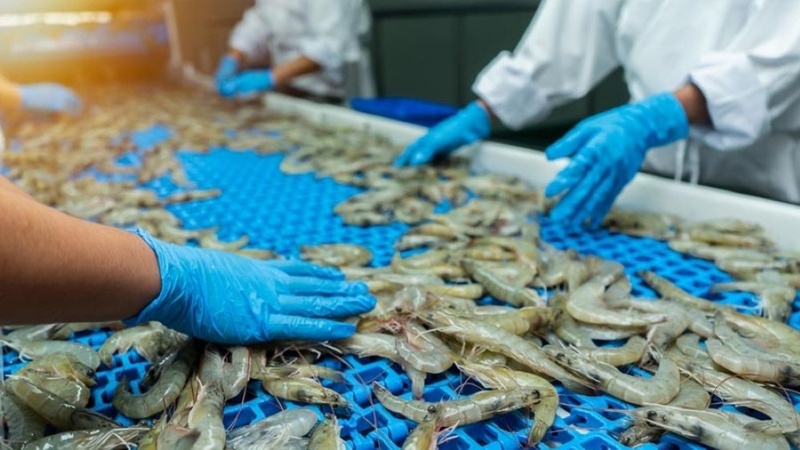
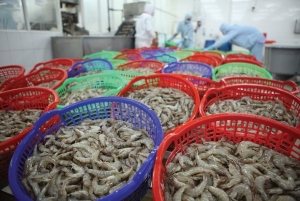
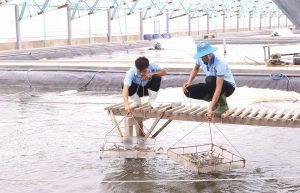
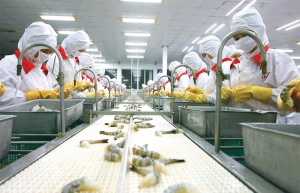
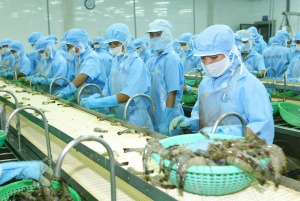
According to the Vietnam Association of Seafood Exporters and Producers, Vietnam’s shrimp exports have shown a strong recovery after a period of stagnation, driven mainly by whiteleg shrimp, which accounts for over 60 per cent of total volume, followed by black tiger shrimp and other varieties.

China emerges as Vietnam’s top shrimp importer

The other shrimp segment witnessed the highest growth at 124 per cent, reflecting increasing demand in niche and premium markets.

Greater China, including Hong Kong, imported nearly $595 million worth of Vietnamese shrimp during the six-month period, driven by domestic supply shortages and rising seasonal demand, particularly for lobster and high-end seafood products.

Traditional markets such as Japan, South Korea, and the EU continued to post stable growth. Japan remains the third-largest buyer thanks to high consumption of processed products. Meanwhile, shipments to the EU have also improved, benefitting from the EU-Vietnam Free Trade Agreement, a competitive edge over rivals like Indonesia and Thailand that lack similar trade preferences.

By contrast, the US market is showing signs of cooling. Although total export value in the first six months rose 13 per cent to $341 million, June shipments fell 37 per cent on-year.

The slowdown has been attributed to US trade policies under President Donald Trump, who in April implemented a 10 per cent retaliatory tariff on various imports. In July, the tariff on shrimp rose to 20 per cent, effective from August 1. Vietnamese exporters are also facing risks of anti-dumping duties exceeding 35 per cent, along with potential countervailing duties expected by the end of the year.

Vietnam ranks among top three global shrimp exporters Vietnam ranks among top three global shrimp exporters
Strategies needed for shrimp sector to meet export target: insiders Strategies needed for shrimp sector to meet export target: insiders
Shrimp exporters plan strategies to boost year-end growth Shrimp exporters plan strategies to boost year-end growth
Seafood sector anticipates boost in exports Seafood sector anticipates boost in exports
Export of shrimp goes sustainable Export of shrimp goes sustainable
This launch marks a significant step toward addressing a major challenge faced by both Japan and Vietnam: the elimination of illegal brokers and intermediaries in the process of sending Vietnamese workers to Japan.

The DOLAB-JICA job search platform (DJ Application), designed for Vietnamese citizens seeking employment opportunities in Japan, was officially launched on July 30.

The platform was developed as part of a technical cooperation project between the Japan International Cooperation Agency (JICA) and the Department of Overseas Labour (DOLAB) under Vietnam’s Ministry of Home Affairs.

This launch marks a significant step toward addressing a major challenge faced by both Japan and Vietnam: the elimination of illegal brokers and intermediaries in the process of sending Vietnamese workers to Japan.

Through the platform’s mobile app and website, Vietnamese individuals seeking to work abroad can search for job listings by industry, work location, and base salary. They can also contact recruiting companies directly without going through intermediaries. Additionally, the platform will be regularly updated with information on Japanese labor policies and other related regulations.

For employers, using the platform to post job openings provides direct access to a large pool of prospective candidates from all over Vietnam.

“This platform allows workers to check online the detailed costs associated with going to Japan, helping to prevent them from being deceived or charged unreasonable fees,” emphasized Mr. Ishikawa Isamu, Deputy Ambassador of Japan to Vietnam.

Furthermore, workers can have online access to job opportunities across Japan from anywhere in Vietnam and contact dispatching organizations directly, thus reducing the financial burden of intermediaries.

Mr. Vu Truong Giang, Deputy Director of DOLAB, said the application also helps workers access specific, authentic, and verified job information.

According to Mr. Giang, the system may be upgraded with new features in the future, based on its performance and other necessary conditions.

Nguyen Hoai Nam, general secretary of the Vietnam Association of Seafood Exporters and Producers (VASEP), noted last week that while specific policy measures from the United States have yet to be officially released, the upcoming US tariff changes represent a substantial competitive headwind. At the same time, this pressure is catalysing structural reform within the industry.

The US administration is expected to make further changes to its retaliatory tariff regime on August 1.

“The shift forces the sector to enhance transparency across supply chains, invest in deep processing, and diversify export markets,” Nam explained. “In the US and EU, there is a strong pivot towards high-value processed seafood products, such as fillet, tempura, sushi-grade, and ready-to-eat frozen goods. If we can withstand this period, the Vietnamese seafood sector will emerge more resilient and globally sustainable.”

Vietnam currently ranks as the sixth-largest seafood supplier to the US, behind Canada, Chile, India, Indonesia, and Ecuador. In turn, the US remains Vietnam’s third-largest seafood export market, following Japan and China, with total export value estimated at $891 million as of the end of Q2, according to the Ministry of Industry and Trade.

Meanwhile, VASEP highlighted that exports to the EU continue to benefit from preferential tariff rates under the EU-Vietnam Free Trade Agreement, while other markets such as Japan, South Korea, ASEAN, and China remain promising albeit increasingly stringent in their quality and traceability standards.

To meet these evolving requirements, VASEP is ramping up efforts to assist enterprises with aquaculture zone registration, QR-code traceability systems, and documentation for origin certification.

Ho Quoc Luc, chairman of Sao Ta Foods JSC, stated that Vietnam’s seafood sector maintains an almost fully domestic supply chain. From farming to processing, production activities are primarily localised.

“At this stage, it is still unclear how US tariffs will apply to the sector in general, or to shrimp in particular. However, for shrimp alone, the entire value chain is domestic, except for a limited volume of imported feed ingredients and breeding stock,” Luc emphasised.

According to the Ministry of Agriculture and Environment, Vietnam’s seafood exports reached $5.16 billion in the first half of 2025, up 16.9 per cent on-year. Shrimp exports rose to $2.07 billion (up 26 per cent), while basa fish brought in $1 billion (up 10 per cent).

To the US specifically, basa fish exports stood at $158 million by mid-June, marking an 8 per cent on-year increase, while shrimp exports reached approximately $341 million. The US is currently the fourth-largest importer of Vietnamese shrimp and the third-largest for basa fish.

However, the ministry indicated that the bulk of this growth stemmed from orders placed earlier in the year, particularly under contracts signed before tariff concerns intensified.

“The looming threat of new tariffs on Vietnamese basa fish from August 1 has prompted many companies to refrain from signing new contracts, instead accelerating the fulfilment of existing deals,” said Tran Dinh Luan, head of the Directorate of Fisheries. “Some exporters are shifting towards high-quality, value-added processed products to improve margins and mitigate the impact of potential price increases once new tariffs take effect.”

VASEP believes that export performance in the latter half of 2025 for shrimp and basa fish will hinge entirely on US trade policy. In particular, the shrimp sector faces triple tariff pressure, from anti-dumping duties, countervailing duties, and retaliatory tariffs.

Prospects for the items are slightly more optimistic following the US Department of Commerce’s decision in June to maintain a zero anti-dumping duty for seven Vietnamese companies. If retaliatory tariffs are kept under control, the basa fish segment may be poised for a breakthrough, experts said.

According to VASEP projections, if countervailing tariffs exceed 10 per cent, the US may no longer be a stable market for Vietnamese seafood, particularly for products with complex supply chains. This would shift focus to neutral markets like Japan, the EU, and ASEAN, though these may not fully offset losses amid slow global demand.

In the first half of 2025, China, the US, and Japan were Vietnam’s top seafood importers, accounting for 19.6, 18.2, and 15 per cent of exports, respectively. Shipments to China jumped 53.7 per cent, and exports to Japan rose 9.1 per cent. Brazil also showed strong momentum, up 71.3 per cent on-year.

“Vietnamese seafood exports are demonstrating commendable agility in an unpredictable global environment,” explained Nam of VASEP. “However, the sustainability of growth in the second half of 2025 will depend largely on US trade policies. These will be the decisive factors shaping the industry’s future trajectory.”

Vietnam currently exports seafood to over 170 global markets and ranks third worldwide in seafood supply. In 2025, the country’s seafood industry is targeting total exports of $10.5 billion.

Seafood firms push export promotions Seafood firms push export promotions

Vietnam’s seafood exports achieved positive results so far this ye thanks to efforts to reinforce the key markets.

Modest seafood export gains in June signal tough road ahead Modest seafood export gains in June signal tough road ahead

Vietnam’s seafood export sector continued its upward momentum in June, but the pace slowed significantly as outbound shipments reached only $876 million, up a modest 4 per cent on-year due largely to a sharp decline in exports to the United States.

China emerges as Vietnam’s top shrimp importer China emerges as Vietnam’s top shrimp importer

China has overtaken the United States to become the largest importer of Vietnamese shrimp, with import value soaring by 80 per cent in the first half of 2025.

Strong scope for added agro-exports
Vietnam has priorities to further open up markets for products and encouraging agricultural cooperation, Le Toan

During a business trip to Brazil in early July to attend the expanded BRICS Summit and conduct bilateral engagements, Prime Minister Pham Minh Chinh met with Brazilian Minister of Agriculture Carlos Favaro to discuss measures to boost agricultural trade between the two countries.

PM Chinh proposed that the two countries’ agriculture ministries establish a joint working group to implement high-level commitments effectively.

“Key priorities include opening up markets further for each other’s major agricultural products, encouraging on-site agricultural cooperation, developing a joint Vietnam-Brazil coffee brand to deepen collaboration in production and consumption, and establishing a food security partnership, with Vietnam supplying rice to help meet Brazil’s needs,” said PM Chinh.

Minister Favaro expressed his willingness to exchange lists of priority agricultural products and work with Vietnam to develop a roadmap for mutual market access.

Separately, during a working visit to Beijing in May, leaders of the Ministry of Agriculture and Environment (MoAE) held talks with Sun Mai Jun, director general of the China’s General Administration of Customs.

The meeting focused on removing barriers to the export of Vietnamese agro-forestry-fishery goods to China. A Chinese inspection delegation is expected to visit Vietnam shortly to assess pomelo and lemon cultivation sites – a prerequisite for signing an export protocol.

Protocols for harvested and live fishery products are also being finalised. Several expired protocols are under review for renewal to better reflect current trade realities. Notably, both sides agreed to establish a “green channel” for agricultural goods, prioritising expedited customs clearance at border gates for fresh fruits during peak harvest periods. Border gate working hours will be extended, including weekends and outside regular hours, to accommodate rising clearance demand.

Vietnam and China are also exploring the establishment of an annual ministerial-level meeting mechanism on a rotating basis, aimed at strengthening cooperation and addressing trade challenges in agro-forestry-fishery products in a timely manner.

These developments, along with the current export growth momentum, are expected to form a solid foundation for reaching this year’s export target.

In the first six months of 2025, the export value of agro-forestry-fishery products reached $33.84 billion, up 15.5 per cent on-year. The trade surplus rose to $9.83 billion, a 16.5 per cent increase, reflecting the growing competitiveness of Vietnamese agricultural goods on the global market.

Within the export structure, agricultural products accounted for $18.3 billion, up 16.8 per cent; fishery products reached $5 billion, up 14.5 per cent; forestry products earned $8.7 billion, an increase of 8.8 per cent; and livestock products hit $264 million, up 10.1 per cent.

Importantly, nine out of 11 key product groups maintained growth, including coffee, rubber, pepper, and wood products.

The MoAE has issued a plan to promote exports of agro-forestry-fishery goods, targeting an annual turnover of $65 billion by the end of this year.

To reach this goal, the ministry has proposed a series of measures, including market expansion, product diversification, and leveraging the advantages of bilateral and multilateral free trade agreements. It also called on relevant agencies to work closely with local authorities in northern border provinces to monitor, update, and forecast goods flow, ensuring efficient vehicle management, minimising congestion, and safeguarding year-end export progress.

At the same time, urgent action is required to maintain momentum in traditional markets while also diversifying export lines and developing products suitable for emerging markets. The ministry’s projections suggest export turnover in the second half of the year will reach $31.6 billion – down 4.8 per cent year-on-year, or approximately $1.6 billion – if current reciprocal tariff rates remain unchanged. In the first half, the country’s export value was estimated at $33.5 billion, with imports at $23.5 billion, up 14.3 per cent and 23.5 per cent respectively over the same period last year.

The MoAE has outlined a roadmap under which the second quarter is expected to exceed $17 billion in exports, the third quarter is forecast to reach between $14–15 billion, and the fourth quarter is projected to surpass $16 billion.

To support these objectives, the ministry has identified three key solution groups. “Firstly, the ministry will continue to stabilise supply chains and strongly develop industries with competitive advantages and growth potential. Secondly, it should take full advantage of tax relief measures and rebalance trade with the United States,” the MoAE noted. “The third group of solutions focuses on accelerating exports from Q3 to drive growth through the remainder of the year.”

Seafood exporters making tariff-ready adjustments Seafood exporters making tariff-ready adjustments

Vietnam’s seafood industry is navigating a challenging export landscape thanks to tariff-related uncertainties in key markets.

Total investment capital estimated at $638 million.

The People’s Council of northern Thai Nguyen province has approved a project to build the Hanoi – Thai Nguyen – Cho Moi expressway under the Public – Private – Partnership (PPP) model.

The 100.69-km expressway will start from the intersection of the Ring Road No.3 in Hanoi and end at the Thanh Binh intersection in Cho Moi commune in  former Bác Kan province (now Thai Nguyen).

Total investment capital is estimated at VND16.789 trillion ($638 million). Of which, over VND5.3 trillion ($201 million) will be funded from the State budget.

The project consists of two sections. The first section is 61.2km long,  lasting from Hanoi to Thai Nguyen. It will have six lanes, allowing a maximum speed of 100 kph. The second, lasting from Thai Nguyen to Cho Moi commune, will have four lanes and allowing a maximum speed of 100 kph.


BANGKOK, THAILAND – Media OutReach Newswire – 24 July 2025 – As artificial intelligence redefines how stories are told, trust is built, and reputations are managed, PRCA Thailand is calling on communicators, business leaders, and curious minds to join a first-of-its-kind national conversation. The inaugural PRCA Thailand Conference will take place on 6th August 2025 at SCBx NEXT Tech, Siam Paragon, under the theme “AI: Truth, Trust and Thailand.”
This bilingual, half-day event offers a rare opportunity to hear from Thailand’s top PR, tech, and business leaders as they unpack what AI means for the future of communication. From deepfakes and data ethics to real-world PR case studies and insights into Thai public opinion, the conference will equip attendees with fresh perspectives, practical tools, and expert guidance for navigating the AI era with clarity and integrity.
At the heart of the programme is the launch of a new PRCA APAC x YouGov study, revealing how AI is already influencing trust, media, and behaviour in Thailand. The findings will be presented by Wiwat (Alee) Khamsawai and Krishkanok (Kayla) Nima of Vero.

PRCA 2

Following this, a special fireside chat will feature Media OutReach Newswire, Founder and CEO Jennifer Kok and Dr. Karine Lohitnavy, Chair of PRCA Thailand and Founder of Midas PR. As the event’s Gold Sponsor, Media OutReach Newswire will lead the discussion titled ‘Viva La Press Release! Old Format, New Tech.’ This dynamic session will explore how digital transformation is breathing new life into the traditional press release, expanding its reach, deepening its impact, and redefining its role in today’s AI-powered communications landscape.

Speaker Narongyod Mahittivanicha, Founder of TWF Agency and Vice President of the Artificial Intelligence Association of Thailand, will explore how AI is transforming PR strategy at every level, from content to crisis management.
Dynamic panel sessions will follow, featuring leaders from Xponential Co, Microsoft Thailand, SCBx, and Predictive, with moderation by respected industry voices including Edelman Thailand’s Vorasit Turongsomboon and digital creator Tossapol Leongsuppon.
Dr. Karine Lohitnavy, Chair of PRCA Thailand and Founder of Midas PR, commented: “This conference comes at a pivotal moment for the communications industry in Thailand. AI is rapidly influencing how people perceive truth, build trust, and engage with information. Through data, discussion, and thought leadership, this event will help PR professionals, decision-makers and those on the front lines of communications, in all its forms, to better understand and respond to these shifts.”
Conference Details:

  • Date: 6 August 2025
  • Time: 1:30 PM to 5:30 PM
  • Venue: SCBx NEXT Tech, Siam Paragon, Bangkok

The PRCA Thailand Conference 2025 highlights PRCA Thailand’s commitment to promoting ethical, innovative, and locally relevant communications practices in Thailand, as well as fostering dialogue on emerging technologies that are shaping the future of the industry.
For more information and tickets, visit: https://prca-conference.org/thailand-conference-2025

The issuer is solely responsible for the content of this announcement.