VEAM ordered to pay VND18.44 billion due to incorrect tax declaration
VEAM must repay VND18.44 billion due to incorrect tax declaration

VEAM must implement corrective measures due to incorrect declarations, resulting in a shortfall in corporate income tax payable for 2010 as stipulated by the Law on Tax Administration and related documents.

However, because the statute of limitations for administrative penalties for tax violations expired, the authorities did not apply administrative penalties but only required the implementation of corrective measures as prescribed.

Specifically, VEAM is required to pay an additional $635,600 in outstanding corporate income tax to the state budget. At the same time, the company must pay an additional $102,000 in late payment penalties. The total amount to be paid according to the decision is over $737,600.

VEAM must complete the repayment within 10 days after receiving the decision. Failure to comply within the deadline may result in enforcement action as prescribed by law. In addition, VEAM still has the right to appeal or appeal against this decision.

It is currently a state-owned enterprise, with the Ministry of Industry and Trade acting as the representative owner, holding approximately 88.47 per cent of the charter capital.

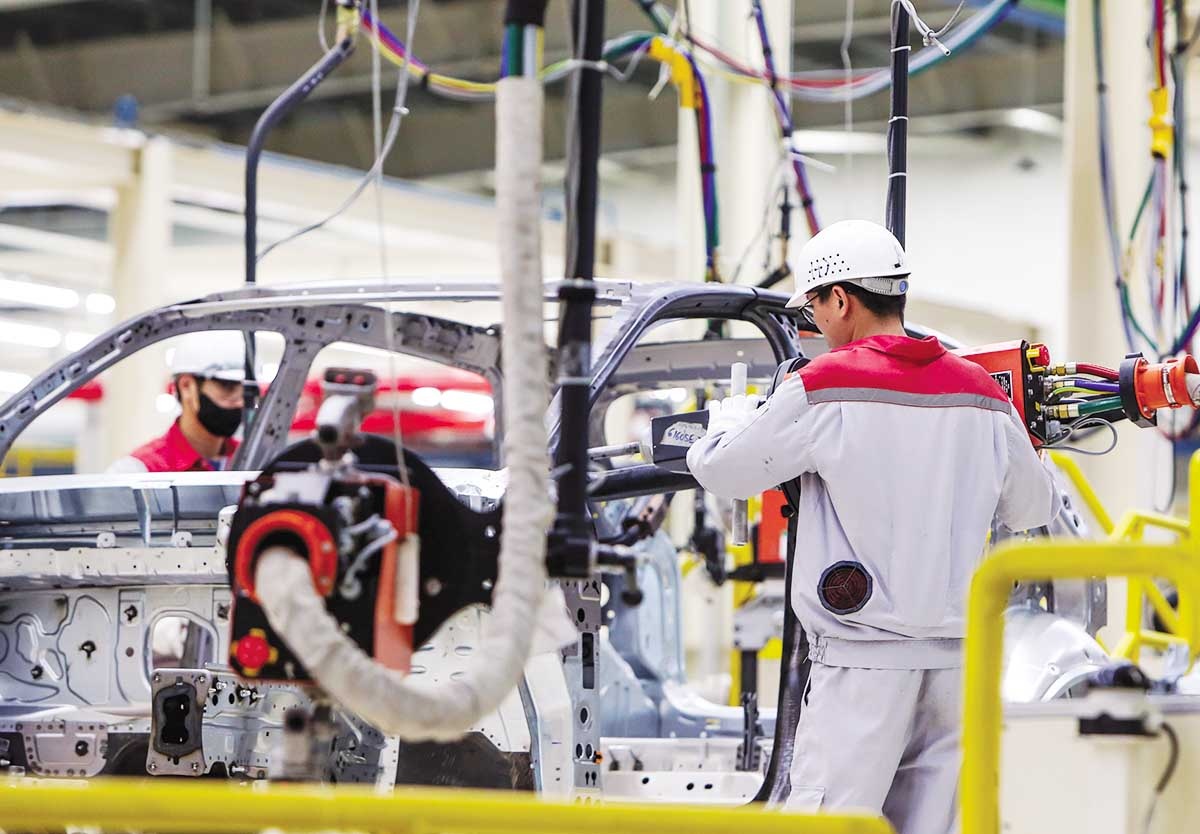
The company operates in the mechanical engineering and vehicle manufacturing sectors, but the majority of its profits over the years have come from investments in leading vehicle and motorcycle joint ventures in Vietnam.

In 2025, the company recorded revenue of nearly $180 million, a 9 per cent increase compared to the previous year. Profits from joint ventures and associated companies reached $265 million, a slight decrease of 2 per cent. On the stock market, VEAM shares are currently trading around $1.38 per share, corresponding to a market capitalisation of over $1.84 billion.

GELEX fined to more than $53,000 for erroneous tax declaration GELEX fined to more than $53,000 for erroneous tax declaration

The Hanoi Department of Taxation has just issued a fine of more than VND181 million ($8,000) to Vietnam Electrical Equipment JSC (GELEX) for erroneous tax declaration, along with over VND1.03 billion ($45,400) in tax arrears and late payment fees.

Vietnam integrates enterprise tax declaration into National Public Service Portal Vietnam integrates enterprise tax declaration into National Public Service Portal

The General Department of Taxation on April 29 completed the upgrade of the electronic taxation application to integrate enterprise and individual tax declaration into the National Public Service Portal with the aim for further facilitating tax performance.

Obstacles get in the way of e-tax payments Obstacles get in the way of e-tax payments

The launch of e-tax was expected to facilitate tax declaration and tax payment, but some firms are still finding it difficult to fulfil their financial duties via the online portal.

Household businesses prepare for e-filing as lump-sum tax ends Household businesses prepare for e-filing as lump-sum tax ends

The Tax Department is stepping up efforts to help household businesses adopt electronic tax filing ahead of the abolition of the lump-sum tax regime.

The initiatives form part of a broader partnership between the two organisations to strengthen digital transformation and enhance operational efficiency, sustainability, and innovation across the agri-food sector.

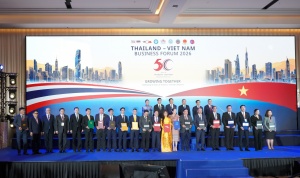
The strategic partnership kick-off ceremony was held in Hanoi on June 8 with the attendance of Thailand’s Prime Minister Anutin Charnvirakul. The event highlighted the growing technology partnership between Thailand and Vietnam, as well as both countries’ shared commitment to innovation-driven economic growth.

AI to power C.P. Vietnam’s integrated agri-food value chain
Thai Prime Minister Anutin Charnvirakul meets with the Thai business community in Vietnam during his official visit to the country and the ASEAN Future Forum in Hanoi. Photo: C.P. Vietnam

Under the collaboration, C.P. Vietnam and FPT will jointly roll out six initial programmes, including AI training for employees, disease consultation systems for livestock farmers, intelligent camera solutions for farm monitoring, image-based raw material quality inspection, digital feed-mixing prescription management, and sales management solutions for dealer networks.

The activities are designed to introduce practical AI applications across multiple businesses and functions, helping improve productivity, optimise operations, and support long-term sustainable growth throughout the agri-food value chain.

Implementation will follow a two-phase roadmap. The first phase will focus on building data and technology foundations, while the second will scale proven AI applications across operations.

“This partnership between CP and FPT demonstrates how combining the strengths of two organisations can create tangible value,” said Montri Suwanposri, director and member of the Executive Committee of CPF, and vice chairman of the Board of Directors of C.P. Vietnam.

“By leveraging AI and digital transformation across C.P. Vietnam’s integrated Feed – Farm – Food value chain, from farm to family, we aim to enhance productivity, strengthen food safety, and improve people’s quality of life,” he said.

He added that throughout its 33 years of operations in Vietnam, C.P. Group has remained committed to innovation and sustainable development, and is now ready for a new phase of growth focused on strengthening partnerships and contributing to a more sustainable agri-food industry in both Vietnam and Thailand.

AI to power C.P. Vietnam’s integrated agri-food value chain
Montri Suwanposri, director and member of the Board of Directors of CPF and vice chairman of the Board of Directors of C.P. Vietnam (left), and Pawalit Ua-amornwanit, CEO of C.P. Vietnam. Photo: C.P. Vietnam

According to Levi Nguyen, CEO of FPT Thailand and FPT Taiwan, AI is becoming increasingly important as agriculture evolves through digital transformation.

“FPT is committed to partnering with CP to build and execute a clear transformation roadmap, from initial exploration to embedding AI as a core organisational capability. Through this collaboration, we aim to integrate AI into key agricultural processes, enhancing productivity, improving decision-making, and driving sustainable growth at scale across Thailand, Vietnam, and beyond,” he said.

Previously, on May 28, CPF and FPT exchanged an MoU at the Thailand-Vietnam Business Forum in Bangkok, attended by Vietnam’s Party General Secretary and State President To Lam and Thai Prime Minister Anutin Charnvirakul.

C.P. Vietnam, a member of Charoen Pokphand Group (C.P. Group), is one of Vietnam’s leading agri-food companies, operating an integrated Feed – Farm – Food model aligned with international standards to deliver sustainable and high-quality food products.

Sustainability remains central to the company’s long-term strategy, focusing on climate protection, improving quality of life, and advancing sustainable food systems. C.P. Vietnam is targeting net-zero emissions by 2050 while continuing to expand renewable energy use and strengthen responsible resource management across its operations.

The company currently operates 12 animal feed mills, two pork slaughterhouses, and six food processing plants, including one of Southeast Asia’s most advanced integrated chicken processing complexes for export, alongside a nationwide network of modern farms across Vietnam.

C.P. Vietnam's three decades of growth and its journey to global dining tables C.P. Vietnam’s three decades of growth and its journey to global dining tables

Years of developing a fully integrated production model have enabled CPV Food Binh Phuoc to successfully export processed chicken to Japan. This achievement has served as a springboard for the CPV Food Binh Phuoc complex, and for C.P.Vietnam as a whole, to advance further in its mission to become the “Kitchen of the World”.

C.P. Vietnam accelerates ESG strategy across supply chain C.P. Vietnam accelerates ESG strategy across supply chain

C.P. Vietnam held its 2025 Supplier Potential Development Conference with a strong focus on promoting environmental, social, governance (ESG) standards on November 20. The event marked a clear shift from a traditional partner-networking meeting to an in-depth forum on sustainable supply-chain development, gathering more than 100 of the company’s strategic suppliers.

C.P. Vietnam enhances AI adoption in agri-food chains C.P. Vietnam enhances AI adoption in agri-food chains

C.P. Vietnam will work with FPT to explore AI and digital solutions across its Feed-Farm-Food value chain, supporting smart farms, lower costs, and advanced food safety traceability.

Cost increases trigger supply chain overhauls for businesses

Another 42 per cent cap their tolerance for tariff-related cost increase at 40 per cent–a threshold far lower than expected, according to the survey published on June 4.

This is Deloitte’s fifth study on the evolving complexity of the tax and business environment of the region. With the evolvement of the business landscape, this year’s study takes a sharper, more executive-focused lens, capturing perspectives from tax leaders and C-suite decision makers. The result is a concise view of what shapes business decisions today, and how tax and tariff considerations influence strategic decisions.

Deloitte’s 2025 Asia Pacific Tax & Tariff Complexity Survey, conducted between August 1 to September 21, 2025, has received inputs from 363 senior executives from a diversified industrial background across the region.

Instead of relying heavily on price adjustments to absorb tariff shocks, executives now view them more as short‑term stopgaps rather than viable long‑term strategies. This shift in mindset reflects a broader recalibration: leaders are increasingly prepared to rethink their operating models when cost pressures intensify, signalling a more proactive and strategic approach to supply‑chain resilience.

Nearly 70 per cent of respondents indicated that their primary focus in supply chain decisions has shifted from minimising costs to focusing on reliability, stability, or strategic alignment. This integrated approach has encountered several key internal obstacles beyond macroeconomic volatility.

More than half of those surveyed cited operational challenges as stemming from internal gaps–insufficient processes, limited data capabilities, critical skill shortages, and workforce downsizing–making up 51 per cent of the total. As a result, transforming the tax operating model has moved rapidly up the C-suite agenda. Operational readiness is no longer a baseline expectation, but a true competitive differentiator.

“Vietnam is one of the markets directly impacted by shifts in regional supply chains, so the survey findings closely reflect what we have observed while working with businesses here,” said Bui Tuan Minh, Deloitte Vietnam Tax & Legal leader.

“Many business leaders are placing greater emphasis on reliability and operational readiness rather than focusing solely on tax costs. Amid significant changes to the domestic tax and legal framework, we believe that elevating the tax function from compliance to strategic decision support will help businesses respond more effectively to future uncertainties.”

To help organisations navigate this complexity, Deloitte introduces the Strategic Response Compass. The compass orients decisions around three critical pillars: Cost Signals (pricing and cash flow sensitivity as catalysts for change), Alignment (supply chain and stakeholder ecosystems as connective strength), and Enablement (digital and operational readiness as engines of transformation).

Eunice Kuo, Deloitte Asia Pacific Tax & Legal leader, said that at the regional level, “tax and tariff volatility has shifted from a background issue to a central factor for any business. Treat cost signals as early warnings, align ecosystems beyond cost, and embed digital enablement at the core. Those that act on these imperatives will not only withstand shocks but will transform volatility into foresight, momentum, and lasting competitive advantage.”

Tax sector eyes 20 per cent GDP revenue mobilisation in 2026-2030 Tax sector eyes 20 per cent GDP revenue mobilisation in 2026-2030

The Finance Ministry has tasked the tax sector with boosting budget revenue mobilisation, expanding taxation in the digital economy and accelerating smart tax administration reforms for 2026-2030.

Tax circular amendments aim to ease import-export procedures Tax circular amendments aim to ease import-export procedures

The Ministry of Finance is accelerating reforms to modernise import-export tax administration, expand digitalisation, and create a more transparent regulatory framework.

Vietnam moves towards data-driven tax administration Vietnam moves towards data-driven tax administration

Vietnam’s tax system is being urged to accelerate the adoption of big data, AI and digital technologies across the entire tax management process. The long-term goal is to build a modern, intelligent and internationally aligned tax governance system.

Deputy Prime Minister Ho Quoc Dung on June 9 signed Decision No.1033/QD-TTg approving the programme. This is a nationally significant initiative, contributing to making sci-tech and digital transformation the main driving force for rapid and sustainable economic growth in the new era.

The programme is built on a holistic, comprehensive, and inclusive approach, encouraging digital transformation throughout the entire economy and social life.

Vietnam government approves programme on development of digital economy and society
Photo: The MST

The programme covers most key sectors and sectors such as agriculture, industry, trade, logistics, energy, education, healthcare, finance and banking, culture, and tourism, while also expanding into emerging areas such as data economy, AI, low-space economy, and space economy.

The programme sets notable goals for 2030. Regarding the digital economy, it aims for the digital economy’s added value to reach approximately 30 per cent of GDP; support at least 500,000 small and medium-sized enterprises in digital transformation; have at least five digital technology companies on par with advanced countries; and develop, encourage, and put into use at least five data platforms.

The value of cashless payments is 30 times GDP. The proportion of higher education training in science, technology, engineering, and mathematics (STEM) fields reaches 40 per cent.

Regarding the digital society, the goal is to achieve 100 per cent of households having access to fibre optic broadband internet with a speed of 1 Gb/s.

By 2030, the 5G mobile broadband network will deliver minimum speeds of 100Mb/s and cover 99 per cent of the population. All Vietnamese citizens aged 14 and above will possess identity cards and electronic identification accounts. At least 95 per cent of people aged 15 and above will have transaction accounts with banks or other authorised institutions, while more than 70 per cent of those aged 18 and above will hold personal digital or electronic signatures. In addition, at least 10 million working-age people will receive basic digital skills training.

Key tasks and solutions

To achieve these targets, the programme sets out 15 key priorities.

These include completing a transparent and synchronised legal framework to support innovation, digital transformation, and the development of the digital economy and society; rapidly expanding secure and sustainable digital infrastructure; and building shared national digital platforms and a Vietnamese-owned digital ecosystem to address cross-sectoral and regional challenges.

The programme also aims to develop the data economy as a new growth driver, accelerate the adoption of AI across industries while ensuring ethical standards and privacy protection, and strengthen cybersecurity to build trust in the digital environment.

Workforce development is another key focus, including expanding digital skills across society, developing digital technology specialists, promoting digital citizenship, and fostering a healthy and inclusive digital culture.

Authorities will support the growth of Vietnamese technology firms as a strategic force in mastering key digital technologies, developing “Make in Vietnam” digital products and services, and expanding into international markets. The programme also seeks to advance data-driven digital governance, improve transparency and efficiency in public administration, and accelerate the digitalisation and automation of public services.

Vietnam government approves programme on development of digital economy and society
Photo: The MST

Other priorities include developing markets that support the digital economy, such as technology, data, carbon credit, and asset-exchange markets; encouraging digital transformation across sectors ranging from agriculture and manufacturing to energy, education, healthcare, tourism, and logistics; and strengthening cooperation among government agencies, businesses, research institutions, and training organisations.

The programme emphasises public awareness initiatives, the promotion of Vietnam’s digital economy on international platforms, and the continuous study of global best practices and emerging technologies to ensure policies remain flexible and responsive to rapid technological change.

Given its cross-sectoral nature, the Ministry of Science and Technology (MST) is assigned as the lead agency to coordinate the overall implementation nationwide, ensuring synchronisation among ministries, sectors, and localities in the development of digital infrastructure, digital data, digital platforms, and digital economy and society development schemes for each sector and industry.

The programme marks a significant shift from the foundation-building phase to the comprehensive development phase of the digital economy and digital society in Vietnam.

Together with the digital government development programme for 2026-2030, the initiative on development of the digital economy and digital society for 2026-2030 contributes to fully completing the three pillars of national digital transformation, namely digital government, digital economy, and digital society, creating an overall framework for ministries, sectors, and localities to synchronously implement digital transformation tasks, boosting economic growth, enhancing national competitiveness, and leading Vietnam to prosperity in the digital age.

Vietnam targets $300 billion digital technology industry by 2030 Vietnam targets $300 billion digital technology industry by 2030

Deputy Prime Minister Ho Quoc Dung approved a key decision on May 13, approving the digital technology industry development programme for 2026-2030.

Vietnam enhances cooperation in digital economy and AI with regional partners Vietnam enhances cooperation in digital economy and AI with regional partners

Vietnam will increase cooperation in digital economy, AI and innovation with Thailand and Singapore as part of efforts to strengthen bilateral ties.

Postal services revenue rises 30 per cent in May Postal services revenue rises 30 per cent in May

Revenue from postal services was estimated to reach VND8.5 trillion ($340 million) in May, a 30 per cent increase compared to the same period last year, reflecting the continued boom in demand for transportation and e-commerce.

Digital economy tops $72 billion as Resolution 57 drives transformation push Digital economy tops $72 billion as Resolution 57 drives transformation push

Vietnam’s digital economy expanded to more than $72 billion in 2025, underscoring the early success of Resolution 57, even as slow fund disbursement and data integration hurdles continue to test implementation.

UOB sees resilience amid cost pressures and external strains

Vietnam’s economic growth slowed to 7.83 per cent on-year in 1Q26 from 8.46 per cent in 4Q25, but still beat both UOB’s 7 per cent forecast and Bloomberg’s 7.6 per cent consensus.

Growth was supported by manufacturing, construction and services, underpinned by strong export demand (19.1 per cent on-year) and realised foreign direct investment inflows (up 9.1 per cent on-year to $5.41 billion), as firms continued diversifying supply chains amid changing global trade rules.

Recent data, though, point to a mixed near-term outlook as higher energy costs weigh. Manufacturing improved in May, with the Purchasing Managers’ Index rising to 52.8 from 50.5 in Apr and 49.8 a year earlier, while the output index surged to 55.6.

Inflation accelerated to 5.6 per cent in May, its highest level in six years. Manufacturing output growth slowed to 9 per cent on-year from 10 per cent in April, bringing average growth in the second quarter to 9.5 per cent, down from 11 per cent in the first quarter.

Export growth eased to 18 per cent on-year in May from 21 per cent in April, while import growth accelerated to 33.8 per cent from 32.5 per cent. As a result, the trade balance recorded a deficit of $12.7 billion in the first five months of the year, compared to a surplus of nearly $5 billion in the same period of 2025, marking the widest gap in almost three decades.

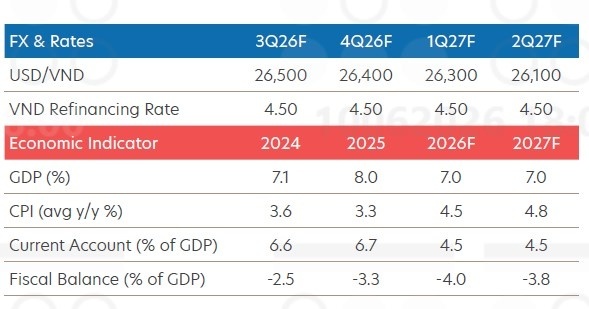
UOB expects pressure on the balance of payments to persist. Large-scale infrastructure and transport projects are likely to drive demand for imported machinery, while elevated oil prices will increase energy costs. According to the bank’s simulations, if crude oil averages $100 per barrel for six to 12 months, Vietnam’s energy import bill could rise by around 40 per cent, or $5.2 billion, in 2026. Under the same scenario, the current account surplus could narrow by about 20 per cent, or $6.5 billion, from an estimated $33 billion in 2025.

Despite near-term challenges, Vietnam’s medium-term ambitions remain highly ambitious. In April, the National Assembly approved a development agenda for 2026–2030 targeting average annual GDP growth of at least 10 per cent. By 2030, the government aims to achieve upper-middle-income status, build a modern industrial base, rank among the world’s 30 largest economies, and raise GDP per capita to $8,500. By contrast, the World Bank forecasts growth of 6.8 per cent in 2026 and inflation of 4.2 per cent, citing the impact of the Middle East conflict on trade, fuel prices, and business activity.

“In our view, downside risks from energy prices and possible shifts in US tariff policy remain significant, though external demand has held up so far, supported in part by the global AI build-out. On balance, we continue to expect growth to moderate to 7 per cent in 2026. The most challenging period is likely in 2Q26-3Q26, with growth averaging about 6.7 per cent,” the UOB report noted.

A key concern for the State Bank of Vietnam (SBV) is inflation, which averaged 4.3 per cent on-year in the first five months, close to its 4.5 per cent target, and the SBV expects it could rise to 5.5 per cent this year. “As SBV monitors downside pressure on the VND, its preference is likely to keep policy rates steady,” UOB reported.

Separately, the SBV has urged banks to lower lending rates to support borrowers, while fiscal measures are deployed, including extending the zero-rate tax on petrol and selected fuel products until the end of June. Even so, some local banks have raised deposit rates amid competition for liquidity as credit demand rises. Outstanding loans reached more than $76 billion as of April 28, up 18.26 per cent on-year, while total liquidity grew a slower 7.7 per cent on-year.

World Bank projects Vietnam’s growth to moderate to 6.8 per cent in 2026 World Bank projects Vietnam’s growth to moderate to 6.8 per cent in 2026

While headwinds are expected to temper the pace of expansion, World Bank’s latest Vietnam Economic Update, released on May 15, projects growth will moderate to a 6.8 per cent in 2026, following an 8 per cent expansion in 2025.

OECD projects GDP growth of 6.5 per cent for Vietnam this year OECD projects GDP growth of 6.5 per cent for Vietnam this year

Vietnam’s GDP is projected to grow by 6.5 per cent in 2026 and 6.2 per cent in 2027, a slowdown amid uncertainty from the Middle East conflict and US trade policy, the Organisation for Economic Co-operation and Development has said.

Government urged to expand public procurement to create innovation Government urged to expand public procurement to create innovation

Vietnam cannot continue relying primarily on capital expansion and labour growth if it wants to achieve double-digit economic growth, experts have said. Instead, the country needs to create stronger market demand for science, technology and innovation through concrete mechanisms.

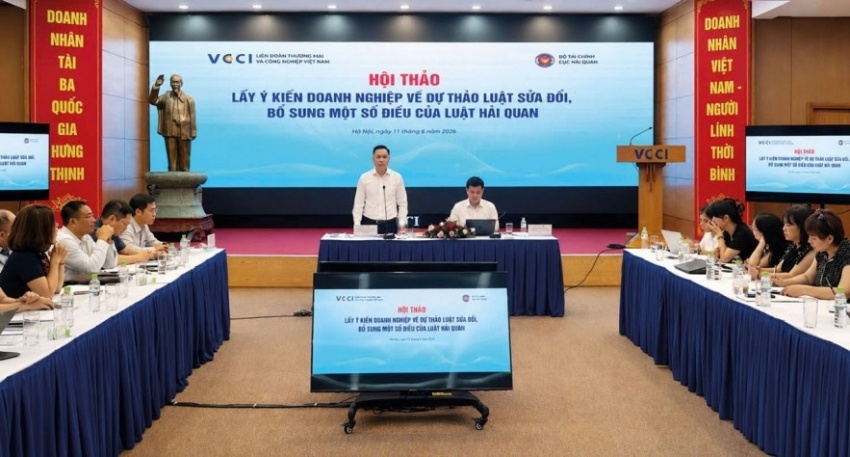
Businesses contribute to draft amended Customs Law
Many businesses contributed opinions on the draft amended Customs Law

Dau Anh Tuan, deputy secretary general and head of the Legal Department, said, “In surveys conducted by VCCI, Customs has consistently been recognised by the business community leading sectors in administrative procedure reform and digital transformation.”

“It is on this positive foundation that the current amendment to the Customs Law has been received with high expectations by the business community. We appreciate the spirit of the draft, especially the institutionalisation of important Party resolutions such as Resolution 57, Resolution 66, and Resolution 68, with a clear message: shifting from a management to a service mindset, with businesses at the centre,” Tuan said.

Nguyen Thanh Hung, deputy director of the Customs Department, said that Customs Law No.54/2014/QH13 came into effect on January 1, 2015, and has been in effect for 12 years. During this time, it still has seen delays, waste time and money for the business community.

“To overcome this, the draft law is expected to amend, supplement, and repeal 42 articles, while adding four new articles out of 104 articles in the current law. This is a concrete step in implementing the Politburo’s resolutions on encouraging the private economy, national digital transformation, and reforming the legislative process, while also aligning with the policy of streamlining the local government apparatus from three levels to two levels,” Hung said.

At the meeting, dozens of businesses concentrated on six subjects. The first was digital customs. Converting all documents to electronic form, automated document verification, and eliminating geographical boundaries will save a significant amount of time and costs.

Regarding customs management via e-commerce platforms, the draft stipulates the responsibility of e-commerce platform owners to declare customs. This is a very new issue, with rapid development and involving many stakeholders. VCCI hopes business can clarify the boundaries of responsibility between platform owners, sellers, shipping companies, and buyers, to ensure strict management while avoiding an excessive compliance burden.

Furthermore, the representatives of firms and manufacturers gave opinions on compliance management, customs clearance agents, the temporary suspension of customs procedures for transit goods showing signs of intellectual property infringement, and post-clearance inspection and decentralisation of authority.

Le Thi Xuan Hue, deputy director of BowerGroupAsia Vietnam Co., Ltd., said, “The drafting agency should also consider adding a mechanism for accountability in the process of assessing business compliance. In reality, many cases of businesses being penalised are not due to intentional violations but stem from inconsistencies or overlaps between legal regulations in various fields.”

“Being rated low in compliance has many consequences, such as increased inspection frequency, prolonged customs clearance time, and increased production and business costs. A mechanism is needed to allow for accountability in cases arising from objective reasons or force majeure before deciding on the level of compliance assessment,” she said.

Phan Manh Ha, director of External Relations at Shopee, suggested reconsidering the regulation requiring e-commerce platforms to declare and verify buyer information because platforms are only intermediaries connecting businesses; they do not own the goods or original data. Therefore, their role should only be to provide information. Ha also expressed concern that verifying the buyer for low-value goods (under $200) would increase costs and prolong customs clearance time.

Customs reform to prioritise high-tech and innovative businesses Customs reform to prioritise high-tech and innovative businesses

Au Anh Tuan, deputy director general of the Department of Vietnam Customs, outlines key changes to the Customs Law aimed at simplifying procedures and offering more incentives for high-tech, innovative, and semiconductor businesses, and helping to support supply chains and boost the startup ecosystem.

Customs Law amendments to strengthen digital integration Customs Law amendments to strengthen digital integration

Vietnam’s proposed amendments to the Customs Law would expand automated data control, strengthen inter-agency data sharing, and establish a regulatory framework for the fast-growing cross-border e-commerce sector.

The exhibition took place from May 26 to 30 at the IMPACT Muang Thong Thani Exhibition and Convention Centre in Bangkok, bringing together more than 3,300 exhibitors from over 60 countries and territories. Asia Ingredients Group’s (AIG) participation underscores its growth trajectory and efforts to build a globally recognised brand.

The event attracted more than 88,000 visitors from 140 countries and territories. Widely regarded as one of the most influential trade exhibitions in the Asia-Pacific region, it serves as a strategic meeting point for stakeholders across the global food and beverage supply chain.

AIG reinforces leading position through global expansion efforts

Marking its sixth participation at the exhibition, AIG made a strong impression with its diverse portfolio of value-added agricultural products, including tropical fruits, coconut-based products, cassava starch, aloe vera, nata de coco, and natural essential oils. All products meet stringent international standards and are well aligned with the growing global demand for sustainable and environmentally friendly consumption.

AIG’s ingredient solutions garnered significant attention from importers, distributors, and business partners from Europe, Japan, South Korea, the Middle East, and the United States.

At THAIFEX-Anuga Asia 2026, Bruns Udo, founder and CEO of Germany-based UB thirsty GmbH, said: “AIG’s products meet European market standards, particularly its coconut and aloe vera ingredients. With its well-established and strategically invested manufacturing system, AIG has the capacity to develop new trends for international markets.”

As one of Vietnam’s pioneering enterprises committed to enhancing the value of the country’s agricultural products through deep processing, quality standardisation, and deeper integration into global supply chains, AIG continues to strengthen its capabilities and competitiveness, advancing its ambition of becoming an internationally recognised brand.

After nearly 25 years of development, AIG has undergone a remarkable transformation, evolving from a raw material distributor into a manufacturer of natural ingredients and a provider of integrated ingredient solutions for the life sciences industry.

With a vision of bringing Vietnam’s value-added agricultural products to global markets, AIG has pioneered a fully integrated value chain spanning raw material sourcing, manufacturing, research and development, and international trade promotion. This model is designed to deliver optimal value to customers and partners while contributing to the sustainable development of Vietnam’s agricultural sector.

By integrating every stage of the value chain, AIG can maintain greater control over raw material quality, enhance its product innovation capabilities, and meet increasingly stringent global standards. The model also serves as a critical foundation for strengthening the group’s competitiveness, expanding its international footprint, and elevating the presence of Vietnamese brands within the global ingredient supply chain.

Currently, AIG has built an ecosystem of more than eight member companies specialising in ingredient solutions for a wide range of industries. Its products are exported to more than 50 countries and territories worldwide. The group is also a trusted partner of leading global brands, including DSM-Firmenich, James Farrell, AAK, Tate & Lyle, PanTheryx, Givaudan, Darigold, and Ingredion.

AIG reinforces leading position through global expansion efforts
The groundbreaking ceremony of Asia Coconut Processing Plant II

AIG continues to accelerate investments in production capacity and advanced processing technologies for agricultural ingredients.

On May 11, the group broke ground on the Asia Coconut Processing Plant II, a key initiative in its strategy to expand its portfolio of value-added coconut products. With a total investment of nearly VND630 billion ($24.2 billion), the Asia Coconut Processing Plant II is expected to commence operations in the first quarter of 2027.

Upon completion, AIG will own the largest coconut processing network in Vietnam, supporting its vision of positioning the country as a leading global hub for the processing and export of high-quality agricultural ingredients.

At the groundbreaking ceremony, AIG also announced a partnership with the International Finance Corporation, a member of the World Bank Group, to develop environmental, social, and governance standards and establish internationally aligned emissions management and reporting systems. The initiative aims to meet increasingly stringent global requirements for sustainability and supply chain transparency.

At the same time, AIG has continued to strengthen engagement with international partners as part of its ambition to build a globally competitive enterprise.

In April, the group welcomed Masayuki Omoto, president and CEO of Marubeni, and his delegation for discussions on long-term and sustainable cooperation opportunities.

Through continuous investment, strategic international partnerships, and a commitment to innovation and sustainability, AIG is steadily advancing its goal of becoming a global ingredient solutions provider while enhancing the value and competitiveness of Vietnamese agricultural products on the world stage.

AIG reinforces leading position through global expansion efforts
AIG and Marubeni partnership set to integrate Vietnam’s agricultural supply chain with global markets

Through its unwavering commitment to innovation, green growth, and continuous value creation over nearly 25 years, AIG has firmly established itself as a top industry brand and is steadily advancing towards international stature, contributing to Vietnam’s ambition of becoming a global hub for the processing and supply of high-quality agricultural products and ingredients.

Asia Ingredients Group breaks ground on coconut processing plant Asia Ingredients Group breaks ground on coconut processing plant

On May 11, Asia Ingredients Group officially broke ground on the Asia Coconut Processing Plant II at Long Phuoc Industrial Cluster in Vinh Long province.

China boosts imports of Vietnamese produce
Photo: baodautu.vn

At a Ministry of Agriculture and Environment’s press briefing on June 1, Tran Gia Long, deputy director of the Planning and Finance Department, said that Vietnam’s agricultural, forestry, and fisheries exports were estimated at nearly $30.7 billion in the first five months, up more than 9 per cent on-year.

Imports reached approximately $22.3 billion during the same period, rising 12.6 per cent, resulting in a trade surplus of around $8.4 billion for the sector.

China remained Vietnam’s largest export market for agricultural, forestry, and fisheries products, accounting for 20.5 per cent of total export turnover. Exports to China surged 28.4 per cent on-year, the highest growth rate among Vietnam’s key trading partners.

In contrast, exports to the US, the second-largest market with an 18.5 per cent share, declined by 3.6 per cent. Exports to the European Union increased by 4.2 per cent, while shipments to Japan rose by 3.5 per cent.

According to the ministry, the strong recovery of the Chinese market has helped offset declining demand from the US and provided a significant growth driver for several key agricultural commodities.

Agricultural goods continued to account for the largest share of exports, generating nearly $16.4 billion in revenue, up more than 6 per cent compared to the same period last year. Coffee remained one of the most sought-after products in international markets, earning approximately $4.25 billion in the first five months and fulfilling nearly 44 per cent of the annual target.

Fruit and vegetables, rice, and cashew nuts also benefited from rising demand in China, as well as from the effective utilisation of free trade agreements to expand market access. Export turnover for fruit and vegetables exceeded $2.8 billion, while rice and cashew nut exports generated more than $2 billion and $1.9 billion, respectively.

In the forestry sector, exports of wood and wood products reached around $7.7 billion after five months, equivalent to more than 42 per cent of the annual target. Fisheries exports achieved roughly 39 per cent of the yearly plan, indicating growth potential in the remaining months of the year if recovery momentum is sustained.

The Ministry of Agriculture and Environment assessed that the agricultural sector continues as a key pillar of the economy, ensuring food security and making a contribution to Vietnam’s trade balance.

However, the ministry warned that significant challenges remained.

China's Winner Medical breaks ground on new production base in Vietnam China’s Winner Medical breaks ground on new production base in Vietnam

Vietnam welcomes Chinese investors in financial centres Vietnam welcomes Chinese investors in financial centres
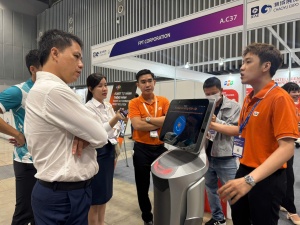
300 exhibitors gather at IEAE 2026 to explore Vietnam’s electronics market 300 exhibitors gather at IEAE 2026 to explore Vietnam’s electronics market

Agri-exports hitting the shelves Agri-exports hitting the shelves
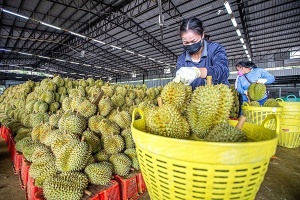
Vietnamese agricultural goods make Chinese e-commerce debut Vietnamese agricultural goods make Chinese e-commerce debut

Vietnamese farm producers embrace e-commerce models Vietnamese farm producers embrace e-commerce models


Since Directive No.38/CD-TTg was issued on May 5, total fines have exceeded VND12 billion ($480,000), according to Tran Le Hong, deputy director general of the National Office of Intellectual Property of Vietnam under the Ministry of Science and Technology (MST). The ministry has established a monitoring mechanism to compile daily reports on violations nationwide to support the guidance and management work of the government.

Over 1,400 IP cases handled under PM's enforcement directive
Tran Le Hong, deputy director general of the National Office of Intellectual Property of Vietnam. Photo: MST

Of the total cases, about 1,146 cases were handled administratively, and 28 cases were prosecuted criminally. Locak authorities also discovered nearly 30 cases of serious violations.

“Three weeks after the PM issued Directive 38 on focusing on decisively implementing solutions to combat, prevent, and handle intellectual property (IP) infringement, the number of administrative violations handled tripled the average monthly rate for 2025. The number of criminal cases initiated related to IP infringement was equivalent to approximately 60 per cent of the total number of cases initiated in 2025,” he shared.

According to the IP Office, many localities have established inter-agency task forces, strengthening coordination among the police, market management, customs, and other relevant agencies in inspecting, detecting, and handling violations.

The office also strengthens support for enforcement agencies, providing expert opinions to assist in handling cases of infringement of intellectual property rights (IPR) and industrial property rights, and publicly announces a contact point for assisting in searches and coordinating the provision of information to support the handling work of enforcement agencies nationwide.

He stated that the MST is coordinating with relevant ministries and agencies to build a national database on IPR enforcement by the end of 2026. Based on the compilation of daily reports, the ministry is gradually forming an initial data source on the detection and handling of IP infringements nationwide.

It is expected that this database will integrate information on administrative and criminal violations; typical, serious, or complex cases; and simultaneously update data on IPR, expert assessment results, and the process of handling infringements by enforcement agencies nationwide.

“Once built and operational, the database will support enforcement agencies in searching, sharing, and cross-referencing information more quickly, and coordinating the handling of cases more effectively. The database will be a powerful tool for statistical work and forecasting trends in IP infringement, serving as a basis for planning the activities of IP enforcement agencies nationwide,” he noted.

The effective tools to repress IP infringements The effective tools to repress IP infringements

The intellectual property of reputable and well-known businesses is perpetually the target of imitation. Nguyen Vu Quan, IP attorney at Kenfox IP and Law Office, explains the solutions in Vietnam for businesses in this area.

EuroCham proposes IP infringement prosecutions EuroCham proposes IP infringement prosecutions

The European Chamber of Commerce in Vietnam (EuroCham) has proposed strong enforcement measures to fight against serious copyright infringement. The threat to Intellectual Property Rights (IPR) has caused significant damage to creators, as well as negatively impacted sales from legitimate consumers.

The announcement was made on June 1. The number of shares to be offered and the price range have not yet been determined, and the initial public offering is expected to occur after the US Securities and Exchange Commission completes its review process, subject to market and other conditions.

Meey Global files confidential draft registration statement with SEC
The icon of Meey Global

This press release does not constitute an offer to sell or the solicitation of an offer to buy any securities. Any offers, solicitations or offers to buy, or any sales of securities will be made in accordance with the registration requirements of the Securities Act of 1933, as amended (the Securities Act). This announcement is being issued in accordance with Rule 135 under the Securities Act.

Meey Global is a holding company conducting its operations through a subsidiary, founded in 2019, Meey Land Group JSC (Meey Land), a data and technology-driven property technology (PropTech) company in Vietnam

Meey Land develops, operates, and commercialises an integrated ecosystem of digital real estate platforms and data intelligence services designed to modernise Vietnam’s property market.

Meey Land’s portfolio consists of an integrated suite of proprietary technologies built to address persistent market inefficiencies related to information fragmentation, lack of transparency, valuation inaccuracy, operational inefficiency, and low digitalisation among real estate brokers and enterprises.

Contacts:

Investor Relations: ir@meeyland.com

Media: media@meeyland.com

Meey Land named as the winner of the Sao Khue Awards Meey Land named as the winner of the Sao Khue Awards

Meey Land Group JSC has been granted the Sao Khue 2022 medal and award by the Vietnam Software and IT Services Association.

US-based GEM commits $80 million investment to proptech firm Meey Group US-based GEM commits $80 million investment to proptech firm Meey Group

US-headquartered Global Emerging Markets (GEM) signed an investment agreement with Meey Land Group JSC (Meey Group), a Vietnamese proptech firm, on May 13.

Digital shift reshaping Vietnam’s real estate brokerages Digital shift reshaping Vietnam’s real estate brokerages

As Vietnam’s Ministry of Construction calls on trading floors and businesses to enhance professionalism, VIR’s Ha Thuy spoke with Nguyen Ly Kieu Anh, CEO of Meey Group, about the role of digital transformation in real estate brokerage.