Searefico broadens industrial and renewable energy footprint

On May 19, the company unveiled its 2026 business plan with targets of VND2.3 trillion ($88.5 million) in new contract bookings, $61.5 million in revenue, $1.85 million in consolidated earnings before tax, and $1.5 million in consolidated earnings after tax.

To realise these goals, the Board of Management has outlined three operational focal points. First, Searefico prioritises projects in industrial, logistics, automation, and green energy sectors where Searefico commands competitive advantages and higher margins. Second, the company will reinforce its position as a leading engineering, procurement, and construction (EPC) contractor offering comprehensive turnkey solutions. Third, the company will boldly invest in projects of long-term strategic value in line with the Board-approved pivot roadmap.

A solid foundation for this plan is the carried-forward backlog of nearly $76.9 million, equivalent to over 120 per cent of the targeted revenue for 2026.

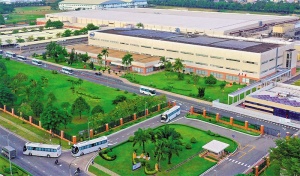
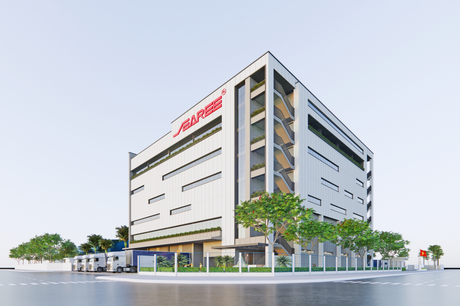
In addition, Searefico will prioritise expanding Searee Industrial Building in Hoa Khanh Industrial Zone, Danang. The venture is expected to commence operations by the end of the second quarter of 2026, while researching potential industrial real estate investments for the next cycle.

In 2025, Searefico’s new contract bookings reached $85 million, representing a 6.5 per cent increase on-year, while executed revenue rose 11.5 per cent to $46.5 million. Meanwhile, consolidated earning before tax grew nearly 4.7 times to $1.2 million, and consolidated net earning after tax reached $946,000, surging over 20-fold from a year ago.

The mechanical and electrical sector, the backbone of Searefico’s ecosystem, recorded a 40 per cent revenue increase and a 116 per cent profit jump compared to 2024, with a prominent project portfolio spanning 5-star Marriott-standard resorts in Quang Nam, Danang, Hanoi, and Ho Tram, Hung Ha Medical Complex, and Movenpick Halong Hotel.

The industrial real estate sector maintained its sustainable growth path with profits doubling, reinforcing that strategic warehouse leasing remains a highly profitable and stable revenue stream. Searee, a member of Searefico, entered the fast-moving consumer goods distribution market and generating an initial revenue of $992,000 as of December 31, 2025.

Regarding asset quality, the highlight was efficient working capital management: short-term receivables decreased by 6.3 per cent to $26.9 million despite rising revenues, demonstrating significantly improved debt recovery capabilities. Concurrently, long-term assets surged by 40.9 per cent to $20.2 million, reflecting the company’s commitment to expanding capacity in preparation for upcoming growth cycles.

Based on the audited 2025 financial results, the board will submit a proposal to the General Meeting of Shareholders for a cash dividend payout of 1.9 US cents per share for 2025, equivalent to 5 per cent of par value. For the 2026 plan, the Board also proposes maintaining a similar dividend level if profit targets are met.

The board has set out a deep transformation roadmap for 2026–2030. Searefico will complete its transition into a “Pure Holding” corporate governance structure, clearly separating ownership from executive management to enhance system-wide transparency and accountability. Concurrently, AI will be integrated comprehensively into corporate governance, manufacturing, bidding, and supply chain management to maintain its competitive edge in the digital era.
CME Solar and Searefico ink cooperative partnership CME Solar and Searefico ink cooperative partnership

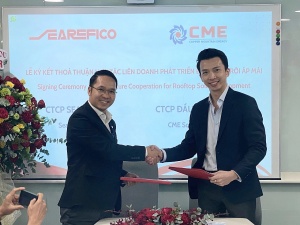
With a shared commitment to reaching net-zero by 2050, Vietnamese renewable energy company CME Solar JSC has announced a new partnership with Searefico JSC, a leading national brand in engineering and technology, to promote rooftop solar across Vietnam.

Searefico targets breakthrough growth in 2025 Searefico targets breakthrough growth in 2025

Riding on a record-breaking project backlog of over VND3 trillion ($120 million), Searefico, one of the Vietnam’s leading established mechanical and electrical groups, is setting its sights on a year of transformative growth in 2025.

Searefico completes full divestment in Arico to Japanese partner Searefico completes full divestment in Arico to Japanese partner

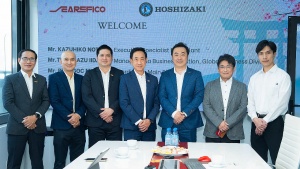
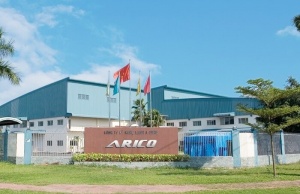
On March 26, the Board of Directors of Searefico Corporation approved the resolution to divest its remaining 48.616 per cent stake in Asia Refrigeration Industry JSC (Arico) to its strategic partner, Hoshizaki.

The proposed domestic public offering, disclosed on May 18, involves up to 18.83 million unsecured bonds with a par value of $4.00 each and a five-year tenor. The company operates one of the largest container fleets in Vietnam.

Each bond will be accompanied by a warrant, allowing investors to purchase up to 10 ordinary shares at an expected price of $0.80 per share, subject to anti-dilution adjustments.

The capital raised from this offering will be primarily directed towards acquiring new container vessels and upgrading existing seaport facilities and inland container depots. The company’s management plans to seek market opportunities to acquire one to two second-hand container vessels with capacities ranging from 2,500 to 3,500 twenty-foot equivalent units (TEUs).

Hai An plans $75 million bond issuance to expand container fleet
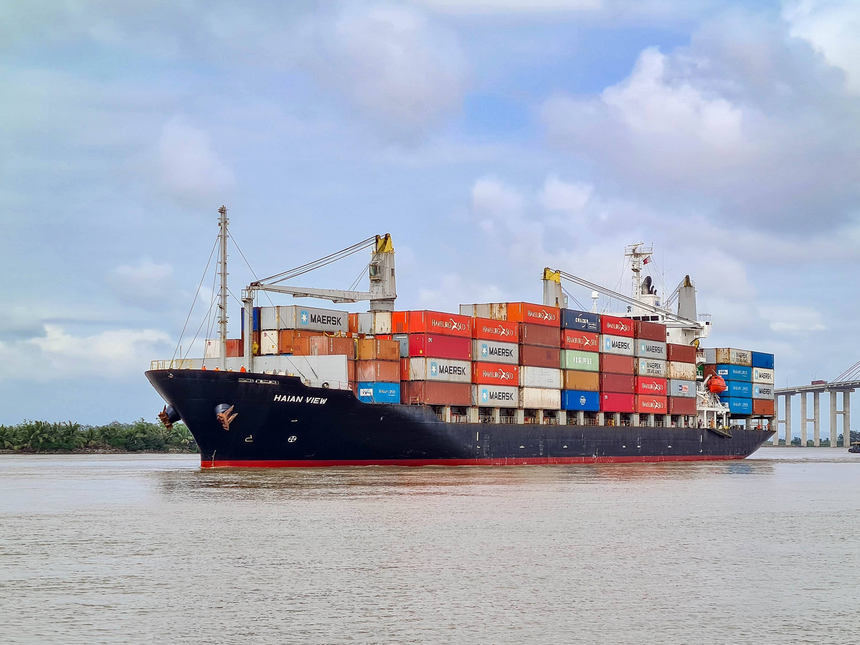
Hai An Transport and Stevedoring JSC operates one of the largest container fleets in Vietnam

“The addition of larger-sized vessels with capacities ranging from 2,500 to 3,500 TEUs is set to meet operational demand for intra-Asia routes and optimise operating costs on a per-slot basis,” the Board of Directors stated in documents from the company’s 2026 AGM. “Despite the overcapacity risk in global container shipping in 2026, domestic and intra-Asia shipping demand is expected to remain strong due to regional trade growth, manufacturing relocation, and Vietnam’s expanding role as a regional manufacturing and export hub”

In addition to immediate second-hand vessel acquisitions, Hai An is dedicating significant resources to monitoring its medium-term new building projects to ensure all capacity expansions proceed according to schedule.

This robust pipeline includes four 3,000 TEU vessel contracts signed in 2025 and two larger 7,100TEU vessel contracts secured in early 2026.

The initial delivery of the 3,000 TEU vessels is slated to begin in December next year, with subsequent handovers planned at steady three-month intervals.

Beyond maritime assets, Hai An is also actively working to expand its port network connectivity by deepening strategic cooperation with other major seaports in the Haiphong area when its Hai An port has reached 100 per cent capacity.

“The port-shipping-logistics integration model may create long-term competitive advantages. Strengthening cooperation with port partners could generate synergies in berth utilisation, cargo throughput, customer base, and operational efficiency,” the board mentioned.

Looking ahead to the 2026 fiscal year, Hai An projects total revenue to reach $205.6 million, representing a marginal 0.2 per cent decrease compared to the $206 million achieved in 2025.

Conversely, the consolidated net profit after tax is projected to climb to $50 million, a 3.6 per cent on-year increase from the $48.2 million recorded in the previous year.

To achieve these financial milestones, the operational volume targets for the year are set at a combined total of over 1.2 million TEUs. This overarching goal includes 500,000TEUs generated from port operations, 496,600TEUs from container vessel operations, and an additional 205,700TEUs from depot services.

Hai An’s container fleets account for 38.5 per cent of the total national container shipping capacity, and the company is one of the few domestic maritime transport enterprises possessing a complete maritime value chain, encompassing shipping, port operations, and integrated logistics.

Danang approves $1.8 billion investment in Lien Chieu Container Port Danang approves $1.8 billion investment in Lien Chieu Container Port

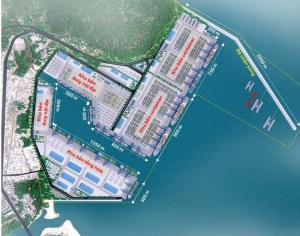
Danang People’s Committee has approved an investment policy for the overall construction of Lien Chieu Container Port.

Hateco-APM consortium wins $1.76bn Lien Chieu port development in Danang Hateco-APM consortium wins $1.76bn Lien Chieu port development in Danang

A consortium between Hateco and the Netherlands’ APM Terminals will develop the Lien Chieu container port in Danang with an investment of $1.76 billion.

Vietnam announces development plan for inland container depots Vietnam announces development plan for inland container depots

With the new list of inland container depots, Vietnam is expected to increase cargo consolidation, customs clearance, and connectivity among production areas, seaports and border gates.

Photo: Hoang Oanh
Photo: Hoang Oanh

The 2026 International Coffee Conference, held in Ho Chi Minh City in April, marked a significant turning point with the launch of the Global Coffee Alliance initiative, amidst the coffee industry’s simultaneous challenges of climate change and market volatility.

Backed by 19 diplomatic missions and international organisations, including key coffee producers and consumers such as Brazil, Colombia, Indonesia, and the UAE, the alliance aims to build a technology-driven global coffee ecosystem and achieve net-zero emissions by 2040. Its roadmap prioritises digital transformation, deep processing, and raising incomes for around 125 million coffee farmers worldwide by at least 300 per cent.

Speaking at the conference, Xavier Depouilly, CEO of DXL Research and Consulting, said that coffee is one of the world’s largest traded commodities, directly connecting Vietnamese farmers with global consumers. However, behind this impressive scale lie increasingly evident challenges. Climate change is making weather unpredictable, water shortages are directly impacting productivity, while global price volatility is diminishing the potential for long-term investment.

“In this context, utilising deep processing is an urgent requirement to increase added value and enhance the resilience of the entire industry,” he said.

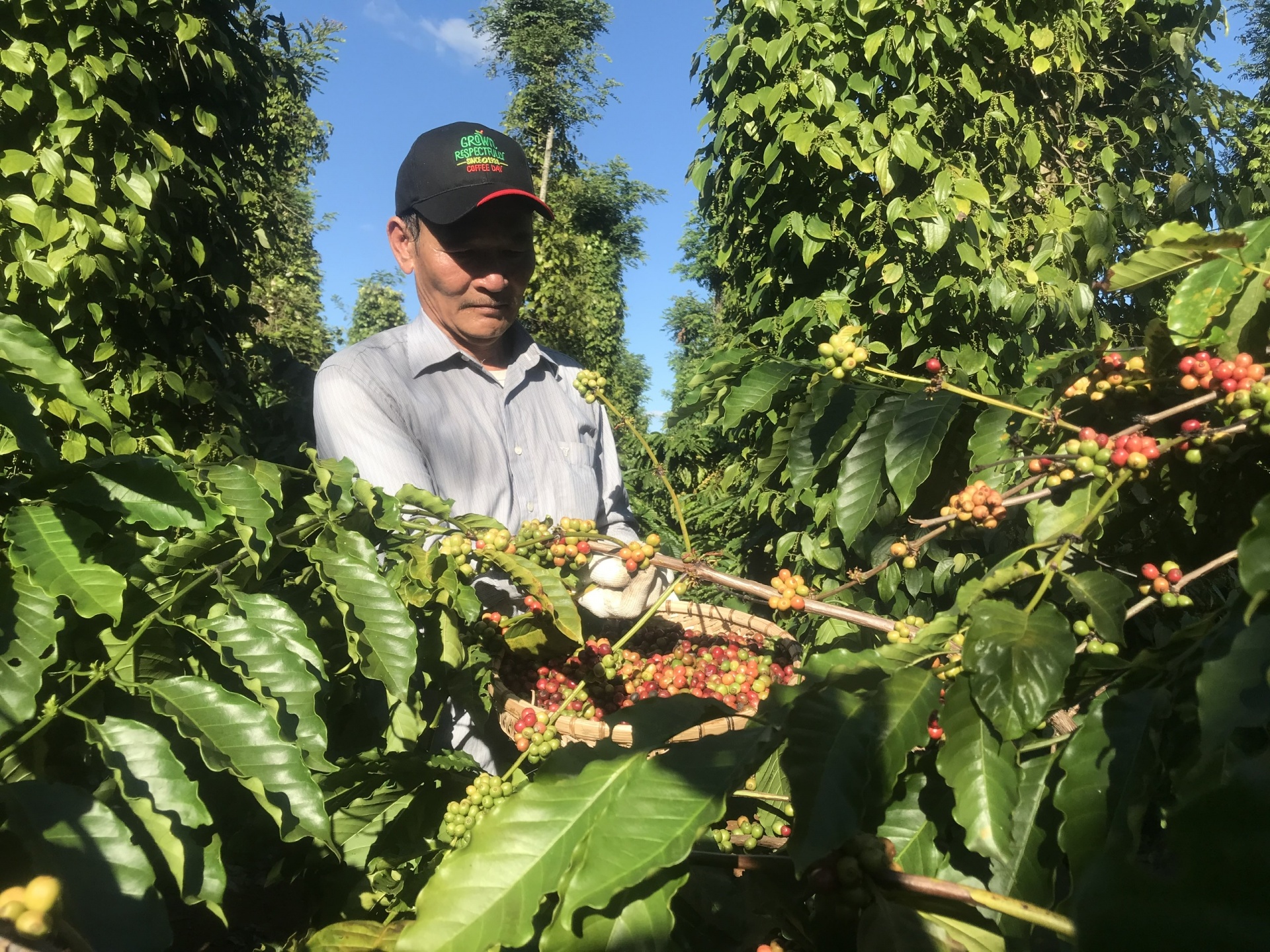
According to data from the Ministry of Agriculture and Environment, Vietnam currently has over 710,000 hectares of coffee plantations, ranking sixth in the world in terms of area and being the second-largest coffee exporter globally, after Brazil. This sector contributes approximately 2.5 per cent to GDP and provides livelihoods for over two million workers.

Coffee exports are projected to have reached around 1.6 million tons last year, with a value of approximately $9 billion, a record high. However, about 80 per cent of production remains green coffee beans, mainly robusta, limiting added value.

In the first quarter of 2026, exports reached nearly 590,500 tonnes, equivalent to $2.75 billion. Although production increased by 12.5 per cent, value decreased by 7.1 per cent due to falling export prices, once again demonstrating the heavy reliance on raw material markets.

Tran Van Cong, Vietnam’s agricultural counsellor to the EU, said that Europe is the world’s largest centre for coffee consumption, processing, and re-export, and a market with increasingly stringent requirements for quality, traceability, and environmental standards. Although Vietnam is the second-largest supplier to the EU, most of its products remain in raw form.

“The paradox is that export turnover is high, but the value generated is not commensurate because the product structure is still heavily focused on green coffee beans. This causes businesses to miss opportunities to participate more deeply in high-value stages such as roasting, extraction, or final consumer products,” he said.

According to coffee expert Nguyen Quang Binh, investing in processing technology and brand building is the fastest way to export high-value coffee. Vietnam has begun investing in deep processing and speciality coffee development, but the processing rate remains modest. Compared to foreign-invested enterprises, many Vietnamese businesses still operate in a fragmented manner and have not yet deeply participated in the global supply chain.

Binh cited the example of Nestlé, which has achieved remarkable business results. “Nestlé’s 2025 financial report indicates that the Nespresso brand alone will generate $8.4 billion in revenue in 2025, equivalent to the export value of Vietnam’s entire coffee crop year combined,” he noted. “Meanwhile, Nestlé has many other billion-dollar brands specialising in coffee, such as Nescafé and Starbucks at Home.”

To address this situation, many domestic businesses have begun implementing large-scale deep processing projects.

Vinh Hiep Co., Ltd., a green coffee bean exporter, is investing $710 million in five key projects, including a freeze-drying and spray-drying processing plant with a capacity of 18,000 tonnes per year. The goal is to create high-end products and utilise by-products to produce organic fertilisers, meeting the clean standards of the EU and US markets.

“The project to build a microbial organic fertiliser plant using coffee by-products will regenerate soil nutrients, help reduce input costs for farmers, and ensure clean coffee standards for demanding markets such as the EU and the US,” said Thai Nhu Hiep, chairman of the board at Vinh Hiep.

According to Nguyen Tien Dung, deputy director of Simexco Dak Lak, the issues hindering businesses from engaging in deep processing include inconsistent raw material quality, high investment costs, and pressure to comply with international standards, particularly on traceability and supply chain transparency.

“Furthermore, the VAT mechanism, which involves collecting taxes upfront and refunding them later, has at many times created significant pressure on cash flow, making businesses hesitant to invest in deep processing models, which require much larger medium and long-term capital than raw material trading,” Dung stressed.

Simexco Dak Lak has pioneered production according to EU standards on items that do not cause deforestation and reduce carbon emissions. The company has also developed a raw material area of approximately 50,000 hectares, linking with 45,000 farming households, ensuring complete traceability data.

Bui Hoang Yen, representative of the Trade Promotion Department under the Ministry of Industry and Trade, believes that while competing on quality with countries like Brazil presents many challenges, cultural factors can become a distinct advantage.

“Positioning Vietnamese coffee in the premium segment, linked to the story of its people, history, and geography, will help the product conquer the international market with its unique identity,” she assessed.

“In addition, free trade deals are becoming an important gateway, helping Vietnamese coffee reach further on the export map. Thanks to this, Vietnamese coffee could access larger consumer markets such as Japan, the EU, Australia, and China,” Yen added.

Nguyen Nam Hai
Chairman, Vietnam Coffee-Cocoa Association

We have spoken extensively about corporate brands and individual products, but have yet to build a national brand for Vietnamese robusta, despite it being a unique product and the world’s largest export of its kind.

The main reason is that Vietnam has too many key export sectors, resulting in a lack of focused resources for coffee. Meanwhile, other countries concentrate on their core industries, consistently developing and protecting their national brands without allowing others to surpass them. Therefore, to build a Vietnamese robusta brand, we must take the initiative to protect and develop it, rather than waiting until others have captured the market.

Coffee is one of the most strategic commodities, with high liquidity and near-indispensable demand in global markets, where prices are constantly influenced by wars, tariffs, and global supply conditions.

However, unlike in previous decades, Vietnam has gradually taken greater control of the market through the development of a robust ecosystem spanning production, processing, and exports. Over more than 40 years, the sector has evolved from small-scale production into a sustainable industry, becoming a strategic commodity that helps stabilise prices and improve farmers’ incomes.

Nevertheless, coffee remains one of the most sensitive markets in the world, naturally balanced by supply and demand. The sector is now facing major challenges from climate change, extreme weather events, geopolitical tensions, and financial market fluctuations and speculation. A single major storm, political event, or instability in exporting countries can trigger sharp price volatility.

In addition, global consumption patterns are shifting, particularly in key markets such as China, India, Russia, and the Middle East. The area under high-quality coffee cultivation is gradually declining, directly affecting supply. At the same time, international regulations such as the EU’s deforestation rules are imposing stricter requirements on origin and product standards, creating pressure but also offering an opportunity to enhance the quality of Vietnam’s coffee exports.

Specifically, the Department of Vietnam Customs issued Official Dispatch No.15912/CHQ-GSQL to regional customs sub-departments on enhancing oversight of rare earth export activities.

The directive comes amid broader government efforts to tighten management of mineral resources, particularly high-value strategic minerals.

Under the new requirements, customs authorities will only process export procedures for rare earth products that fully meet conditions and have legally verified origins in accordance with governmental Decree No.17/2020/ND-CP, and are included in export lists issued periodically by the Ministry of Industry and Trade or otherwise approved by competent authorities in special cases.

Full inspections mandated as Vietnam moves to control rare earth exports
Vietnam is expected to issue a national rare earth strategy in 2026

Decree 17 dated February 2020 on amending a number of articles of decrees concerning business investment conditions in sectors under the management of the Ministry of Industry and Trade.

At the customs declaration stage, enterprises must provide complete and detailed information on mineral names, quality standards, mine origin, and the entities responsible for extraction and processing.

In cases where trading companies are not directly involved in extraction or processing, they must supplement information on domestic purchase contracts and invoices. Details of mining licences, recovery permits, or export authorisations must also be fully declared.

Notably, the Department of Vietnam Customs requires physical inspection of all rare earth export shipments, except for certain specific cases.

Inspections will be conducted based on risk management principles, combined with verification against product categories and quality standards set by the Ministry of Industry and Trade.

Where sufficient grounds for determination are lacking, customs authorities will take samples for assessment by accredited conformity assessment organisations.

Inspection results will serve as the basis for customs clearance decisions or legal handling. Customs units are also required to strengthen information collection and analysis on rare earth exporters, and promptly place high-risk cases under post-clearance audit.

The Department of Vietnam Customs has instructed all units to strictly implement the directive and publicly post its contents at customs clearance points for enterprises to follow. Any implementation issues must be promptly reported for guidance and resolution.

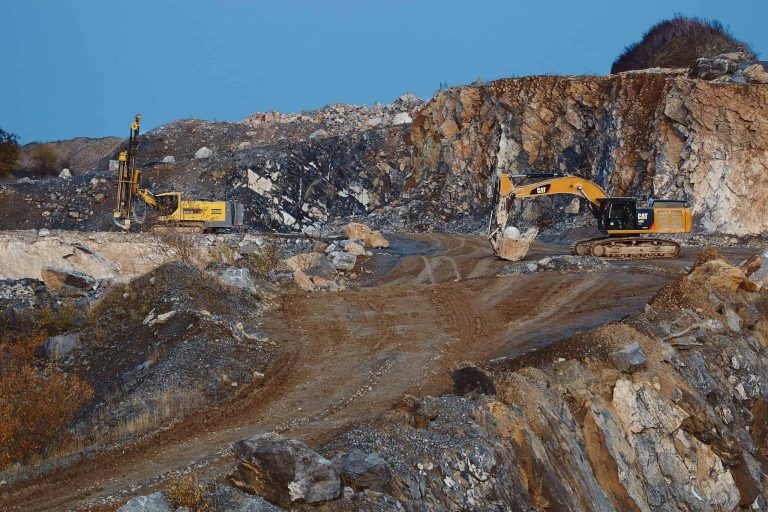
According to the Ministry of Agriculture and Environment, Vietnam possesses substantial rare earth potential, with reserves ranked among the top two or three globally and distributed across 21 cities and provinces.

The Ministry has largely completed baseline surveys of rare earth-bearing areas, is maintaining strict oversight, and is drafting a national rare earth strategy expected to be issued in early 2026.

Rare earths were for the first time incorporated into the Law on Geology and Minerals, which was passed by the National Assembly in November 2024 and took effect from July 2025.

An amended law, adopted in December 2025, affirms rare earths as specially important strategic minerals, requiring strict control over exploration, extraction and processing, while prohibiting the export of unprocessed rare earth ores.

Experts propose development direction for rare earth industry Experts propose development direction for rare earth industry

Vietnam has the world’s second-largest reserves of rare earths – an estimated 22 million tonnes – yet the resources have remained untapped, scientists have said.

South Korea's Trident obtains rights to rare earth mines in Vietnam South Korea’s Trident obtains rights to rare earth mines in Vietnam

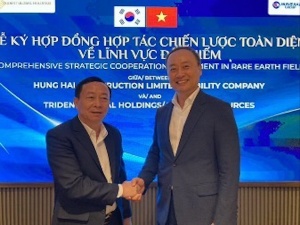
Trident Global Holdings, a prominent South Korea-based conglomerate with interests in mining, real estate, and carbon capture technology, has acquired rights to three significant rare earth element mines in Vietnam.

Vietnam yet to tap rare earth resources Vietnam yet to tap rare earth resources

Vietnam boasts a large reserve of approximately 30 million tonnes of rare earth, but the country has yet to conduct thorough research about how to exploit and process it effectively.

Intel provides equipment for workforce training and research
Photo: Intel

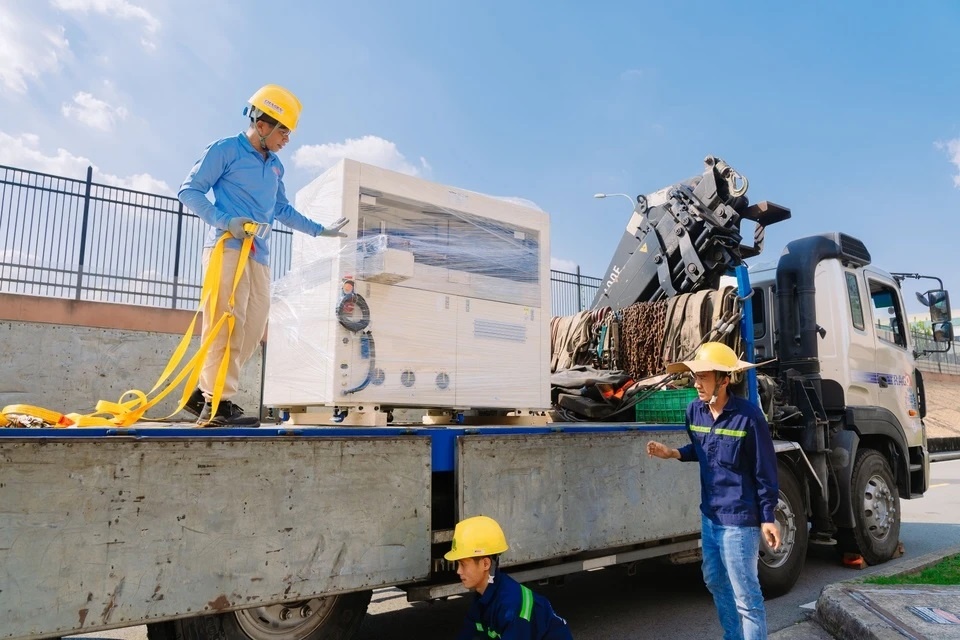
These devices will help serve training and research activities in Vietnam’s semiconductors sector, with students gaining hands-on experience with specialised equipment. The initiative also helps narrow the gap between academic knowledge and industry practice, especially in chip packaging and testing.

The project is part of the partnership signed between Intel and SHTP. It will support SHTP and Vietnam National University Hanoi to build comprehensive semiconductor training capabilities, ranging from design to assembly and testing. It also opens up applied learning and research spaces for Vietnamese engineer workforce.

According to Intel, the project will optimise existing resources, easing the burden of public investment in expensive training infrastructure. It will also speed up the readiness of training facilities while creating conditions for engineers to upgrade their skills.

“Vietnam is emerging as an important link in the global semiconductor supply chain. It is a top priority to develop the workforce,” said Kenneth Tse, vice president and general director of Intel Products Vietnam.

He expressed hope that the provision of equipment would empower educational institutions to implement hands-on training programmes closely aligned with industry needs. “The project will accelerate workforce readiness to realise Vietnam’s long-term semiconductor development ambitions,” Tse added.

Vietnam now has around 7,000 chip design engineers, more than 6,000 engineers and over 10,000 technicians working in semiconductor packaging, testing and related industries. The country aims to train 50,000 semiconductor engineers by 2030 and will move towards hundreds of thousands of workers in the future.

The government is dedicated to improving the quality of semiconductor training through a range of measures, including investing in 18 key laboratories, partnering with major economies in chip production and financial support for costly equipment and advanced technologies.

Intel relocates key assembly and testing lines to Ho Chi Minh City Intel relocates key assembly and testing lines to Ho Chi Minh City

Global tech giant Intel will relocate part of its Costa Rica assembly and testing operations to Ho Chi Minh City, reinforcing Vietnam’s role in the global supply chain for advanced data centre chips.

AIC to build $2.1bn AI data centre in Ho Chi Minh City AIC to build $2.1bn AI data centre in Ho Chi Minh City

Ho Chi Minh City continues to attract billions of dollars in foreign investment, with a key focus on data centres, semiconductors, and high-tech sectors.

AI and semiconductors drive new wave of Vietnam-South Korea business ties AI and semiconductors drive new wave of Vietnam-South Korea business ties

Vietnam and South Korea are entering a new phase of business cooperation, with companies from both sides expanding investment and partnerships in AI, semiconductors and digital infrastructure.

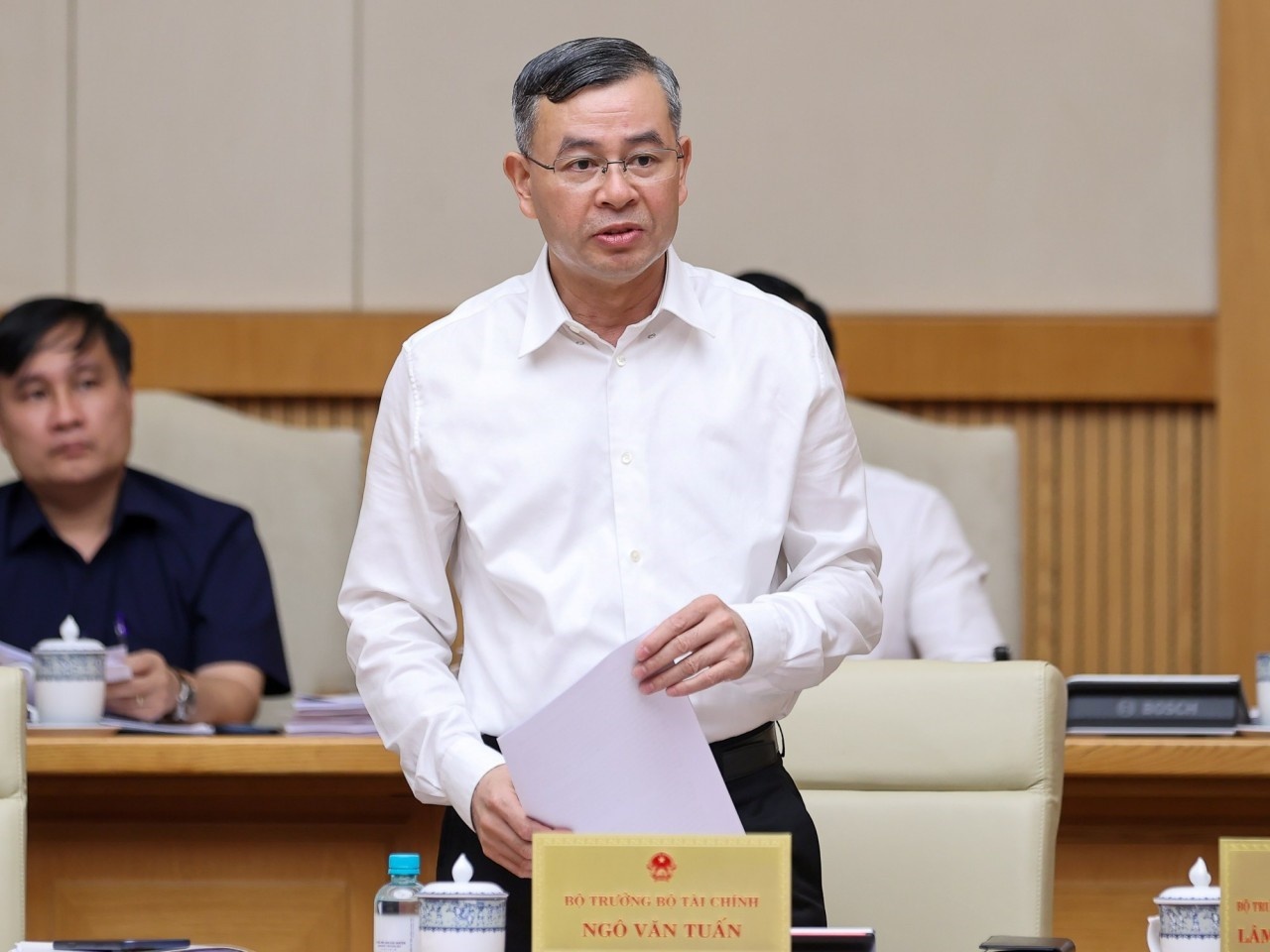
Minister of Finance Ngo Van Tuan highlighted these priorities at a regular government meeting on May 4, stressing the need for administrative vigilance as external shocks from global energy markets and scheduled hikes to state-managed service fees continue to weigh on domestic price stability.

Vietnam tightens price controls and boosts public investment
Minister of Finance Ngo Van Tuan at the government meeting

According to the National Statistics Office, the Consumer Price Index (CPI) climbed to 5.46 per cent in April on an on-year basis, accelerating sharply from the 4.65 per cent recorded in March and approaching the 5.5 per cent worst-case scenario the Ministry of Finance (MoF) presented on April 23.

The primary driver is cost-push pressure from global crude oil prices, which have surged since March amid heightened geopolitical tensions in the Middle East.

“These global disruptions have not only inflated energy costs but also caused a surge in international logistics and transportation expenses, creating a cascade effect across various domestic sectors including transport services, food, and construction materials,” Minister Tuan said.

These categories account for over half of the CPI basket and recorded the sharpest rises in the first four months of 2026, with the food category up 5.2 per cent on-year and transportation climbing 11.1 per cent in April.

The government is now bracing for additional domestic price pressures, including increased electricity demand during the peak summer heat and scheduled adjustments to state-managed service fees.

Healthcare service prices are projected to rise by approximately 8.9 per cent, driven by the inclusion of management costs and a significant hike in medical staff allowances.

This adjustment alone is estimated to add around 0.28 percentage points to the national CPI. In the education sector, tuition caps for the 2026-2027 academic year are slated for an average rise of 12.7 per cent for public universities and 18 per cent for public vocational training institutions.

To mitigate these pressures, the MoF has called for a coordinated response between ministries, urging the Ministry of Industry and Trade to ensure a stable domestic energy supply through continued management of the Fuel Price Stabilisation Fund, while the Ministry of Construction provides clear guidance on adjusting construction contracts to account for material price volatility.

Each ministry is required to maintain strict market surveillance to prevent speculative hoarding and unreasonable price hikes, particularly in essential commodities such as rice, pork, and construction supplies, while localities instructed to implement market stabilisation programmes suited to their specific economic conditions.

On the growth front, the government is focusing on public investment as a key engine to achieve high growth in 2026.

Total social investment Q1 reached $29.8 billion, a 10.7 per cent rise on-year. Foreign direct investment (FDI) remains a bright spot, with registered capital in the first four months of the year estimated at $18.2 billion, a 32 per cent increase on-year, while implemented FDI rose by 9.8 per cent to $7.4 billion.

Issues persist in the deployment of state capital, however, with approximately $1.85 billion of the 2026 investment plan remaining unallocated across 14 ministries and 17 localities as of late April.

Minister Tuan mandated that these entities expedite their allocation processes and finalise regional mining plans by Q2 of this year to ensure an adequate supply of raw materials for key infrastructure projects.

As part of its forward-looking strategy, the MoF has asked all government agencies and local authorities to submit revised growth indicators this week to facilitate a comprehensive report to the central government on achieving targets for the 2026-2030 cycle.

MoF honing draft amending tax laws MoF honing draft amending tax laws

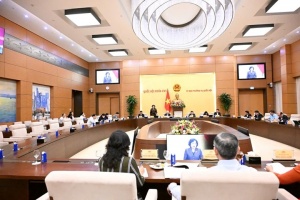
On April 20, the Standing Committee of the National Assembly met to discuss amending the Law on Personal Income Tax, the Law on VAT, the Law on Corporate Income Tax, and the Law on Special Consumption Tax.

Vietnam nears investment grade as reforms and growth strengthen outlook Vietnam nears investment grade as reforms and growth strengthen outlook

Vietnam’s sovereign credit ratings are now approaching investment grade, standing just one notch below the threshold under S&P Global Ratings and Fitch Ratings, and two notches below under Moody’s, bringing the country closer to its target of achieving investment-grade status.

ASEAN+3 policymakers assess energy and supply chain disruptions ASEAN+3 policymakers assess energy and supply chain disruptions

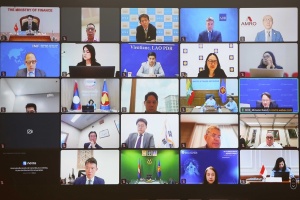
On April 28, the ASEAN+3 Policy Dialogue and Regional Economic Review was held virtually, co-chaired by the Philippines and Japan. Tran Quoc Phuong, Deputy Minister of Finance, attended and delivered remarks from Vietnam.

Becoming an early seller on emerging platforms is not just a test, but a strategic move to capture a ‘blue ocean’ before competitors fully recognise the opportunity.

In 2026, Vietnam’s e-commerce landscape is no longer dominated solely by major players. Instead, the market is witnessing the rise of platforms that are smarter, safer, and more personalised.

In this context, joining emerging platforms offers undeniable exclusive advantages.

New e-commerce platforms: ‘Blue ocean’ opportunity or a risk trap for sellers in 2026? (PR)

The primary leverage lies in an ‘absolute priority’ algorithm, where new marketplaces proactively boost visibility for pioneer sellers to build their ecosystem, granting you a central presence without the need for massive keyword bidding budgets.

Simultaneously, ‘dream-tier’ operational costs – featuring preferential commission rates and comprehensive shipping subsidies – present a golden opportunity to optimise profit margins, which are otherwise being eroded by escalating fee pressures on legacy platforms.

Most notably, the distinct value comes from a direct connection with category management teams rather than impersonal automated responses, ensuring that a seller’s voice carries genuine weight in shaping the platform’s core features and policies.

However, not every emerging platform is a guaranteed ‘gold mine’ for businesses. Sellers must remain vigilant against latent risks, primarily the disconnect between technological quality and actual traffic volume.

Without robust marketing solutions to drive user engagement, a storefront can easily become ‘commercially invisible’, losing the opportunity to reach customers despite the platform’s superior technical features.

New e-commerce platforms: ‘Blue ocean’ opportunity or a risk trap for sellers in 2026? (PR)

Furthermore, operational stability is a critical factor; vulnerabilities such as payment glitches, delayed order processing, or fragmented logistics systems can directly tarnish a shop’s reputation.

Most notably, as Vietnam’s personal data protection regulations reach a peak of stringency in 2026, legal compliance and cybersecurity have shifted from being optional to mandatory.

Should an e-commerce platform lack a fortified security infrastructure, sellers risk facing vicarious liability – both legally and reputationally – in the event of a severe data breach.

MuaMau: A strategic ecosystem

MuaMau provides a comprehensive solution for sustainable operations. More than just a marketplace, it sets new standards that help sellers optimise resources and scale their business systematically:

Flexible operating model: Through the MuaMau platform, businesses can choose between a fully managed system to maximise efficiency or a semi-managed model, allowing sellers to maintain control over product quality while reducing operational pressure, minimising manual processes, and saving on labour costs.

Guaranteed traffic support: MuaMau ensures stable traffic, helping sellers eliminate concerns about sales performance in the early stages so they can focus entirely on product quality.

New e-commerce platforms: ‘Blue ocean’ opportunity or a risk trap for sellers in 2026? (PR)

Built-in marketing leverage: The platform integrates tools for connecting with KOLs and running seasonal promotional campaigns, allowing brands to scale effectively without heavy investment in external marketing teams.

New e-commerce platforms are becoming an ‘escape route’ for sellers overwhelmed by rising costs and intense competition. While risks still exist, with a clear mindset and technological agility, this presents a strong opportunity to establish your presence and lead in a new market landscape.

E-commerce platforms to pay taxes on behalf of sellers E-commerce platforms to pay taxes on behalf of sellers

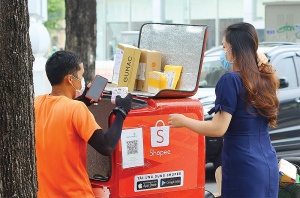
The Ministry of Finance (MoF) has proposed that all VAT and personal income tax of sellers on e-commerce platforms are deducted as soon as the order is successfully confirmed and paid for.

Legal reins evolved in e-commerce Legal reins evolved in e-commerce

In the context of Vietnam’s e-commerce market entering a new phase of development, tightening legal regulations are placing increasing demands for compliance on all stakeholders.

E-commerce platforms and social networks face stricter responsibilities under draft law E-commerce platforms and social networks face stricter responsibilities under draft law

The government has submitted a draft law on e-commerce to require identity verification of livestream sellers and affiliate marketers through the national digital ID system, aimed to enhance transparency and protect consumers.

This milestone not only affirms its outstanding academic capability, but significantly expands the high-quality international education map in the region.

Four international accreditations in 12 months

In Ho Chi Minh City’s international education landscape, authorisation to deliver the International Baccalaureate (IB) programme has long been considered a hallmark of academic excellence. However, attaining the status of a Full IB Continuum School–possessing the capacity to seamlessly implement all three core programmes from Primary Years, Middle Years, to the Diploma Programme–represents a far more rigorous echelon.

This is not merely a matter of adopting a curriculum; it is a profound systemic challenge where everything from educational philosophy and faculty proficiency to operational infrastructure must be harmonised.

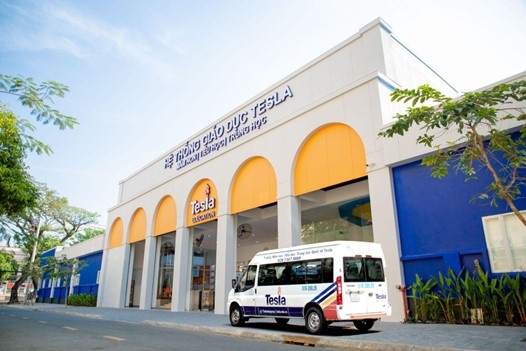
Tesla Education achieves IB Continuum
Tesla Education has become the fifth institution in Ho Chi Minh City authorised to deliver the Full IB Continuum

The official award of the IB Diploma Programme certification in April 2026 marks the culmination of Tesla Education’s five-year standardisation journey. The milestone follows a rapid sequence of international accreditations secured within just 12 months: CIS (June 2025), Cambridge (July 2025), IB MYP (November 2025), and IB DP (April 2026).

This is no coincidence, but the result of a deliberate long-term strategy, underpinned by the consistent adoption and execution of the rigorous standards set by the International Baccalaureate Organisation and other leading global accreditation bodies.

Multi-tiered assurance

In an increasingly fluid world, students must combine a global outlook with the ability to adapt while remaining grounded in local values. Recognising that no single programme can fully deliver this, Tesla Education has developed a mutually reinforcing academic ecosystem, where leading international standards operate in tandem rather than isolation.

The IB Continuum serves as the backbone, shaping mindset and ensuring a coherent learning journey from Kindergarten to Grade 12. Alongside this, the Cambridge programme strengthens subject mastery, providing depth in core disciplines. While the IB is widely recognised for fostering critical thinking, independent inquiry, and global citizenship, Cambridge builds the academic rigour and subject-specific expertise sought by leading universities in the UK and the US.

.

Tesla Education achieves IB Continuum
The Full IB Continuum pathway creates a learning environment where students are not only equipped with knowledge, but also develop intellectual confidence and adaptability

In particular, the integration of the Ministry of Education and Training (MoET) core curriculum within this ecosystem is by no means a “regulatory concession,” but a deliberate, strategic choice. For Vietnamese families, the MoET framework is the anchor that keeps students connected to their mother tongue, history, and national culture. This parallel integration allows students to grow the wings of an international mindset, mastering future skills while retaining their local roots. They can flexibly transition their pathways, fully prepared to step out into the world yet entirely capable of contributing to their homeland.

Strategic location and pioneering financial approach

The introduction of a full IB Continuum at Tesla Education reshapes the decision landscape for parents in Ho Chi Minh City. With most IB Continuum schools clustered in the eastern and southern districts, areas such as Tan Binh, Phu Nhuan, and Binh Tan have lacked fully integrated international pathways. Tesla Education’s campus in Tan Binh helps close this gap, offering a more balanced distribution of access across the city.

Location plays a critical role in the long-term learning experience. Reducing daily travel in increasingly congested traffic can save students one to two hours a day, preserving energy and supporting both wellbeing and participation in extracurricular activities. For many families, this also removes a significant “hidden cost” associated with long commutes.

Tesla Education achieves IB Continuum
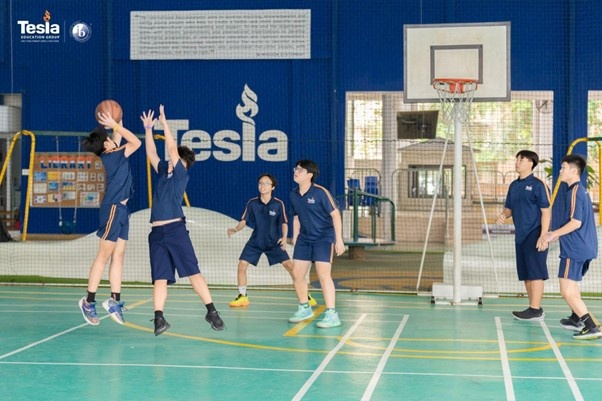
From “exclusive” to “accessible”: Tesla Education is expanding access to the International Baccalaureate pathway for Vietnamese families

This advantage is particularly valuable for expatriate communities surrounding Tan Son Nhat Airport. For the large population of South Korean and other expatriates, the demand for an accredited, familiar international curriculum is high. A localised IB Continuum school directly meets this elite demand, sparing families from exhausting cross-city logistics.

Beyond locational leverage, Tesla Education approaches the educational investment pragmatically. With overseas study costing $30,000 to $40,000 annually, a world-class domestic pathway is increasingly attractive. To commemorate the IB Continuum milestone, Tesla has launched a DP Scholarship Fund offering up to 90 per cent tuition coverage for outstanding Grade 10 students.

Reaching up to VND500 million ($19,000), this support makes an elite IB education remarkably accessible. This initiative democratises opportunities, signalling that international education is no longer an exclusive “luxury” but a strategic, long-term investment for modern families.

Ultimately, the synergy of a prime location, a standardised global academic framework, and agile financial policies positions Tesla Education as a masterstroke of strategy. Parents can now holistically optimise both educational quality and their children’s future investment journey.

Established in 2015 in Ho Chi Minh City, Tesla Education is a fully authorised IB Continuum World School, delivering a seamless International Baccalaureate journey from Early Years through High School. The institution pioneers a dual-pathway model that beautifully synergises the Vietnamese national curriculum with the globally renowned IB framework, placing a strong emphasis on science, technology, project-based inquiry, and holistic skill development.

For the current academic year, Tesla is proud to launch the Academic Excellence Scholarship for incoming Grade 10 students. Offering up to 90 per cent tuition coverage–equivalent to a maximum value of VND500 million ($19,000).

Discover more at: tesla.edu.vn

New Zealand institutes strengthen educational exchange and cooperation with Vietnam New Zealand institutes strengthen educational exchange and cooperation with Vietnam

A delegation of New Zealand Institutes of Technology & Polytechnics and Private Training Establishments made its first official visit to Vietnam from March 29 to April 5.

Vietnam and Queensland deepen education ties to power innovation Vietnam and Queensland deepen education ties to power innovation

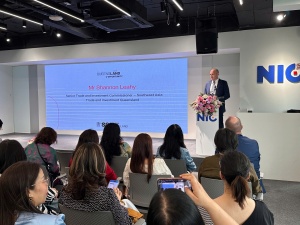
On April 15, the National Innovation Centre (NIC) under the Ministry of Finance, in collaboration with Trade and Investment Queensland (TIQ), hosted the Education for Innovation Showcase in Hanoi, bringing together around 80 representatives from government agencies, universities, research institutes and businesses across Vietnam and Australia.

ACCA rolls out career workshops for Vietnamese students and teachers ACCA rolls out career workshops for Vietnamese students and teachers

The Association of Chartered Certified Accountants has held a workshop in Hanoi to help operationalise career guidance at school level following new regulatory direction.

Ho Chi Minh City gives investor approval for transshipment mega-port
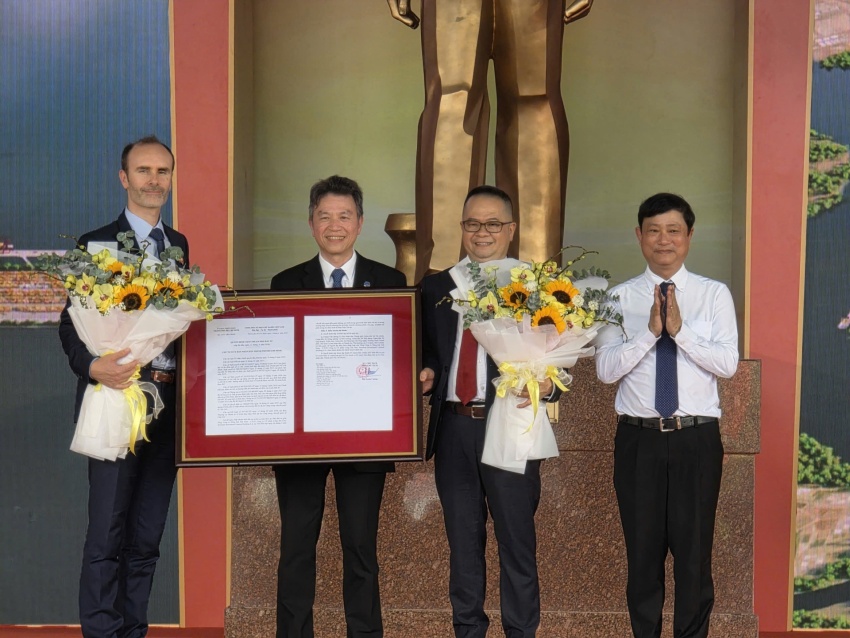
Reprentatives from investors received the investment decision. Photo: Le Toan

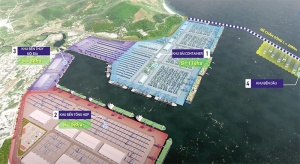
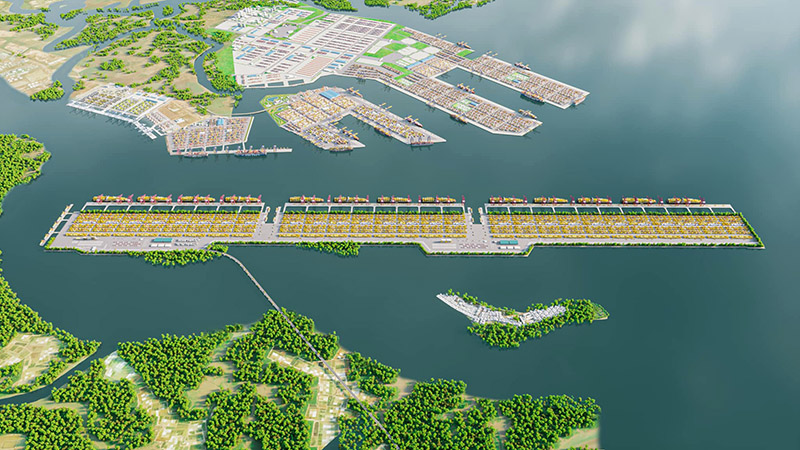
Can Gio International Transshipment Port is estimated to require a total investment of nearly VND128.87 trillion (approximately $4.95 billion). The project will span around 570 hectares, with a total main berth length of about 7.5 km.

Designed capacity is expected to reach approximately 4.8 million TEUs by 2030, rising to around 16.9 million TEUs by 2047. By 2050, the project is slated to develop about 13 berths, capable of accommodating vessels of up to 250,000 DWT or larger, subject to conditions.

The investors plan to contribute about $222.6 million by 2030 and an additional $521 million) in line with the implementation schedule, with completion targeted within 20 years from the date of land and water area handover. The project will have an operating term of 50 years and is eligible for investment incentives in accordance with prevailing regulations.

Speaking at the ceremony, Nguyen Le Chon Tam, general director of Saigon Port JSC, described the approval as a milestone event, marking the culmination of months of persistence.

“This decision is not merely a legal document, but a historic mission and a vote of confidence entrusted by the State and the city to maritime enterprises, empowering us to unlock marine potential and pursue global ambitions,” Tam said.

According to Tam, the Can Gio Port project holds a strategic position along international shipping routes, with a designed capacity of nearly 17 million TEUs, serving as a critical gateway for Vietnam to integrate more deeply into global logistics ecosystems and supply chains.

“We fully recognise the role of state-owned enterprises in leading and shaping national value creation,” he noted, adding that the venture represents a combination of domestic capabilities and international expertise.

VIMC and Saigon Port are among Vietnam’s leading operators in port exploitation and maritime transport. Meanwhile, MSC Group stands as a particularly important strategic partner. As the world’s largest shipping line, MSC brings strong financial capacity and an extensive global network, helping to place Vietnam firmly on the global maritime map.

“If Vietnam is likened to a vessel heading out to the open sea, then Ho Chi Minh City is its most dynamic economic engine. Can Gio Port will serve as a pioneering vessel, enabling the country to sail further and more steadily on its international journey,” Tam said.

Can Gio emerges as Ho Chi Minh City's next growth frontier Can Gio emerges as Ho Chi Minh City’s next growth frontier

The coastal district is poised for major development, becoming a new focal point for investment and sustainable urban expansion.

Consortium to invest in Can Gio transshipment port Consortium to invest in Can Gio transshipment port

A consortium of Vietnam Maritime Corporation (VIMC), Saigon Port, and Terminal Investment Limited Holding has been selected to invest in Can Gio International Transshipment Port.

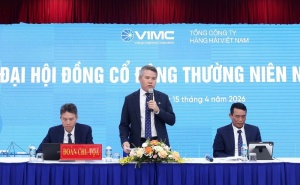
VIMC sets $887m revenue target for 2026, invests in Can Gio Port VIMC sets $887m revenue target for 2026, invests in Can Gio Port

Vietnam Maritime Corporation has set a revenue target of VND22.18 trillion ($887.2 million) for 2026, an increase of 8 per cent on-year, while maintaining profit at near last year’s level.

The outbreak of war in the Middle East overshadowed the results from the Association of Chartered Certified Accountants (ACCA) and Institute of Management Accountants (IMA) Q1 2026 Global Economic Conditions Survey (GECS) published on April 14.

The survey fieldwork, conducted between March 3-19, coincided with the outbreak of the conflict in the region, which will have been a major factor weighing on respondents’ sentiment.

“As an export-oriented economy deeply integrated into global supply chains, Vietnam faces particular vulnerabilities from the forces identified in this survey. Brent crude prices rose by nearly 70 per cent following the outbreak of hostilities, threatening to drive up the costs of production and transportation of goods, directly affecting the competitiveness of Vietnamese exports,” the report said.

“The surge in fertiliser prices, driven by disrupted supply from the Middle East, further heightens pressure on Vietnam’s vital agricultural sector. Currency depreciation pressures on emerging economies add another layer of challenge for Vietnamese businesses and financial planners.”

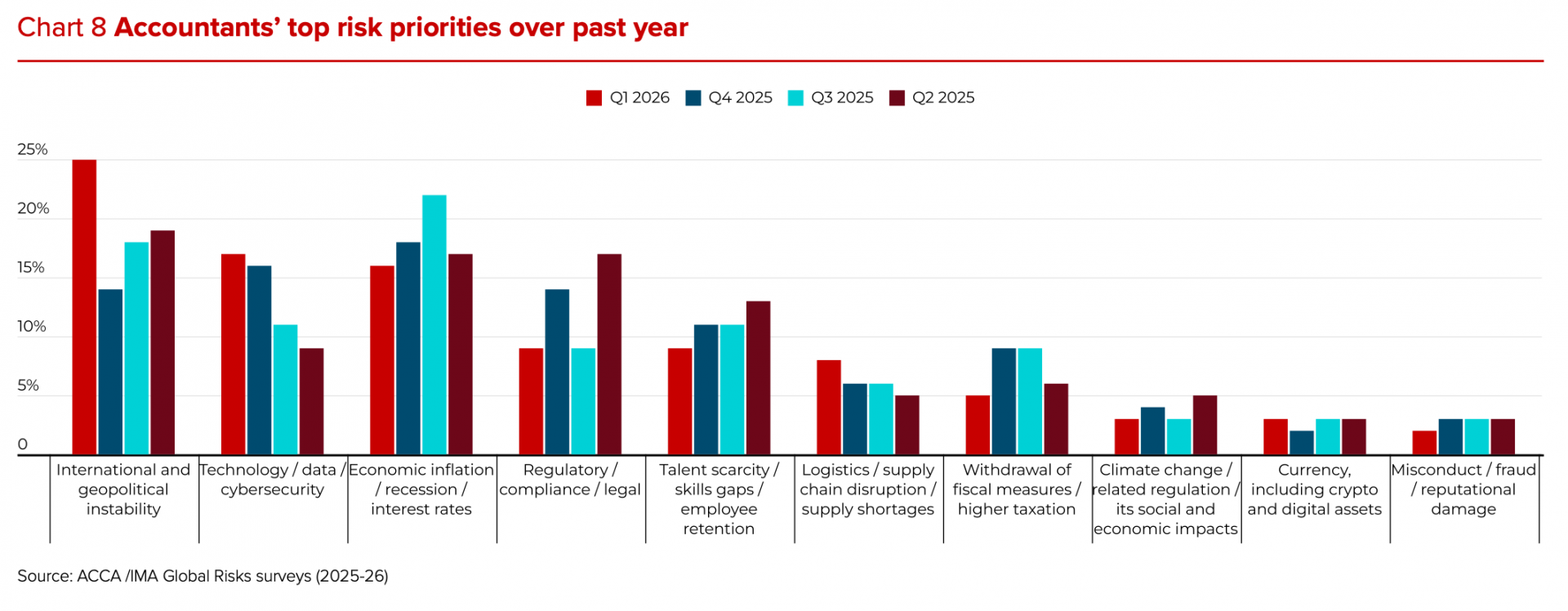
Across Asia-Pacific, 33 per cent of respondents ranked geopolitical instability as their top risk priority in Q1, well above the global average of 25 per cent. Cybersecurity ranked second globally at 17 per cent, a growing concern as Vietnam’s digital economy expands.

Globally, 74 per cent of surveyed finance professionals now expect inflation to rise over the next three months, and 35 per cent expect interest rates to increase. Encouragingly, the Global New Orders Index registered a solid recovery and the Global Employment Index also improved, reflecting the underlying resilience of the global economy before the conflict escalated.

Middle East war weighs heavily on accountant confidence
Accountatnts’ top risk priorities over past year

Ren Varma, head of Mainland Southeast Asia at ACCA asserted that the Q1 GECS findings were a powerful reminder that global geopolitical instability was not a distant concern, but had direct and immediate implications for businesses and finance professionals in Vietnam.

“Rising operating costs, mounting inflationary pressures and the convergence of geopolitical, technological and economic risks demand faster adaptation than ever before. This is precisely when the integrity, professional expertise and strategic thinking of accountants matter most. The ACCA is committed to ensuring our members and future members in Vietnam are equipped to lead through this uncertainty,” Varma said.

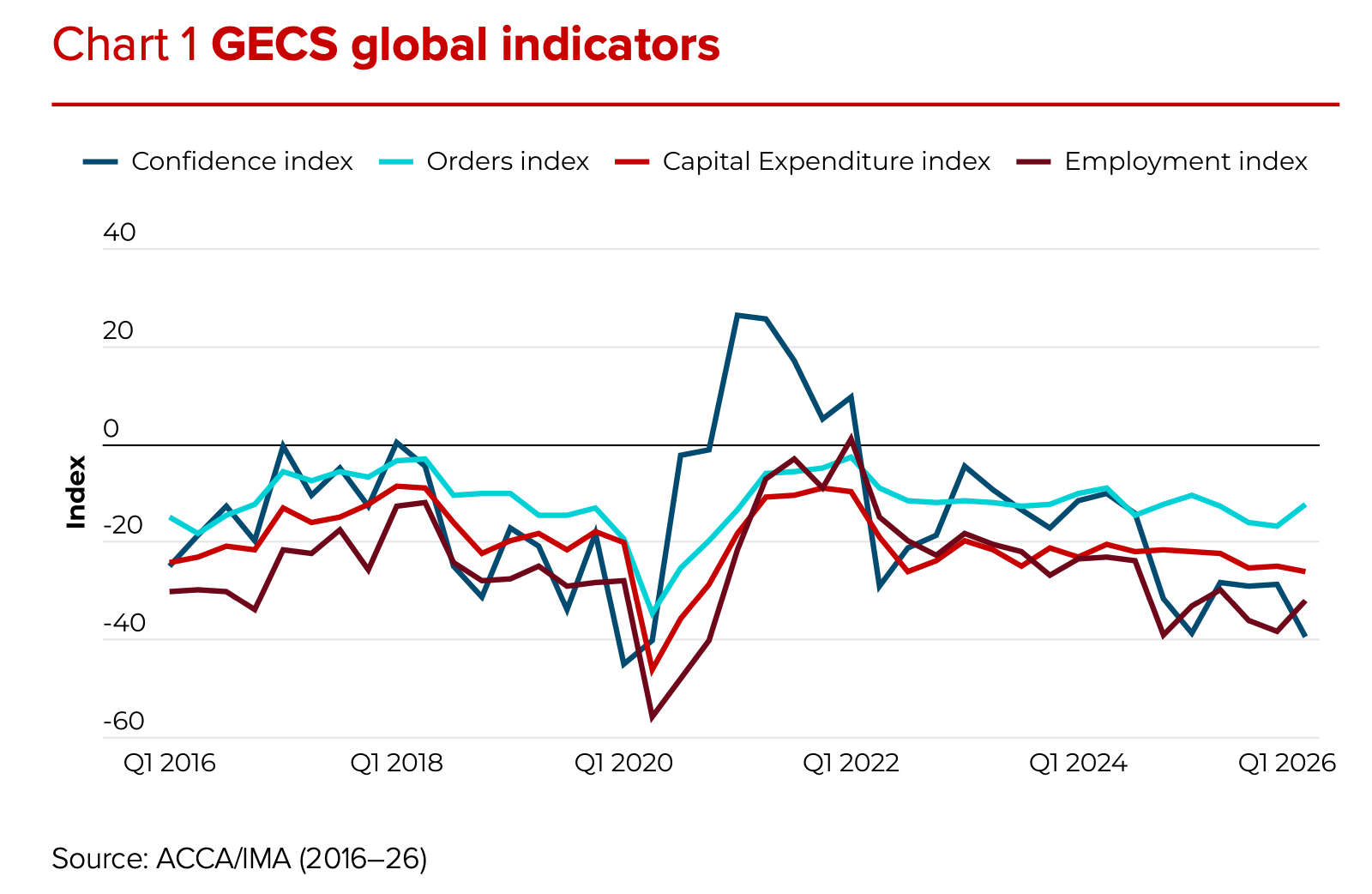
The survey showed a sharp decline in confidence among accountants and finance professionals in the early months of this year. Sentiment is close to the series lows recorded at the beginning of the pandemic in 2020, as firms grapple with the fourth major shock to hit the global economy already this decade. Confidence also fell very sharply among chief financial officers taking part in the survey.

“While the April two-week ceasefire brought hope to markets of some recovery from the biggest global oil shock since at least the 1970s, the enormous uncertainty clouding the global economy remains. Even if a more durable resolution is found energy and other commodity prices look set to remain elevated,” the report said.

While geopolitical instability unsurprisingly ranked as the top risk priority for accountants in Q1, it is only the second time since the global risks survey was added to the GECS in Q2 2023 that economic risks have not been the top concern. They were in third place after cyber risks, which were second.

Rachael Johnson, head of Risk Management and Corporate Governance at ACCA said that this shift did not suggest a reduction in economic worries, but a growing recognition of how converging forces shape the macro landscape.

“Respondents point to AI and cyber threats amplifying other risks, and emphasise how eroding trust in institutions, information and leadership, is becoming a defining feature of operating in today’s world,” she said.

Rising cost pressures were evident at businesses in Q1, with the percentage of respondents reporting increased operating costs at its highest rate since Q3 2022 in the aftermath of Russia’s invasion of Ukraine. Given the recent spike in the price of energy and other important commodities and increasing stresses in supply chains, the risk is that cost pressures facing firms will mount over coming months.

Some of the survey results were a bit more encouraging, likely owing to the resilience of the global economy ahead of the onset of the conflict in the Middle East. The Global New Orders Index registered a solid increase and is now at its historical average level. The Global Employment Index, which captures the hiring and firing decisions of firms, also improved somewhat, while remaining below its historical average.

“The global economy entered 2026 in decent shape, but enormous uncertainty currently clouds the outlook. Inflation is already beginning to rise sharply, and downside risks to growth will mount the longer energy and other commodity prices remain elevated,” said Alain Mulder, senior director, Europe Operations & Global Special Projects at IMA.

Middle East war weighs heavily on accountant confidence
GECS global indicators

Jonathan Ashworth, chief economist at ACCA noted that major supply shocks created very tricky situations for policymakers.

“After years of above target inflation, central bankers need to tread cautiously so as to not let the inflation genie out of the bottle. Very high government debt levels also constrain the room for major fiscal support in many countries, even in advanced economies,” said Ashworth. “Developments in the Middle East over coming weeks and months will be absolutely key for global economic prospects over the remainder of this year.”

Global business confidence remains fragile despite Q2 uptick Global business confidence remains fragile despite Q2 uptick

Global business confidence among professional accountants is showing tentative signs of a recovery, according to new data from an international survey.

ACCA builds new generation of financial leaders in Vietnam ACCA builds new generation of financial leaders in Vietnam

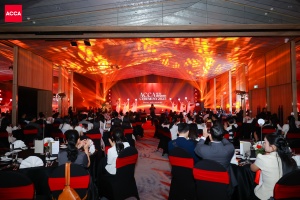
The Association of Chartered Certified Accountants (ACCA) celebrated its New Member Ceremony on October 13 and 14 in Hanoi and Ho Chi Minh City, highlighting the theme “Legacy of Leadership”.

ACCA urges firms not to delay sustainability reporting over data gaps ACCA urges firms not to delay sustainability reporting over data gaps

As sustainability reporting requirements continue to evolve, new guidance from the Association of Chartered Certified Accountants stresses that organisations should not be deterred by a lack of hard data, as reasonable estimates can still generate useful information.